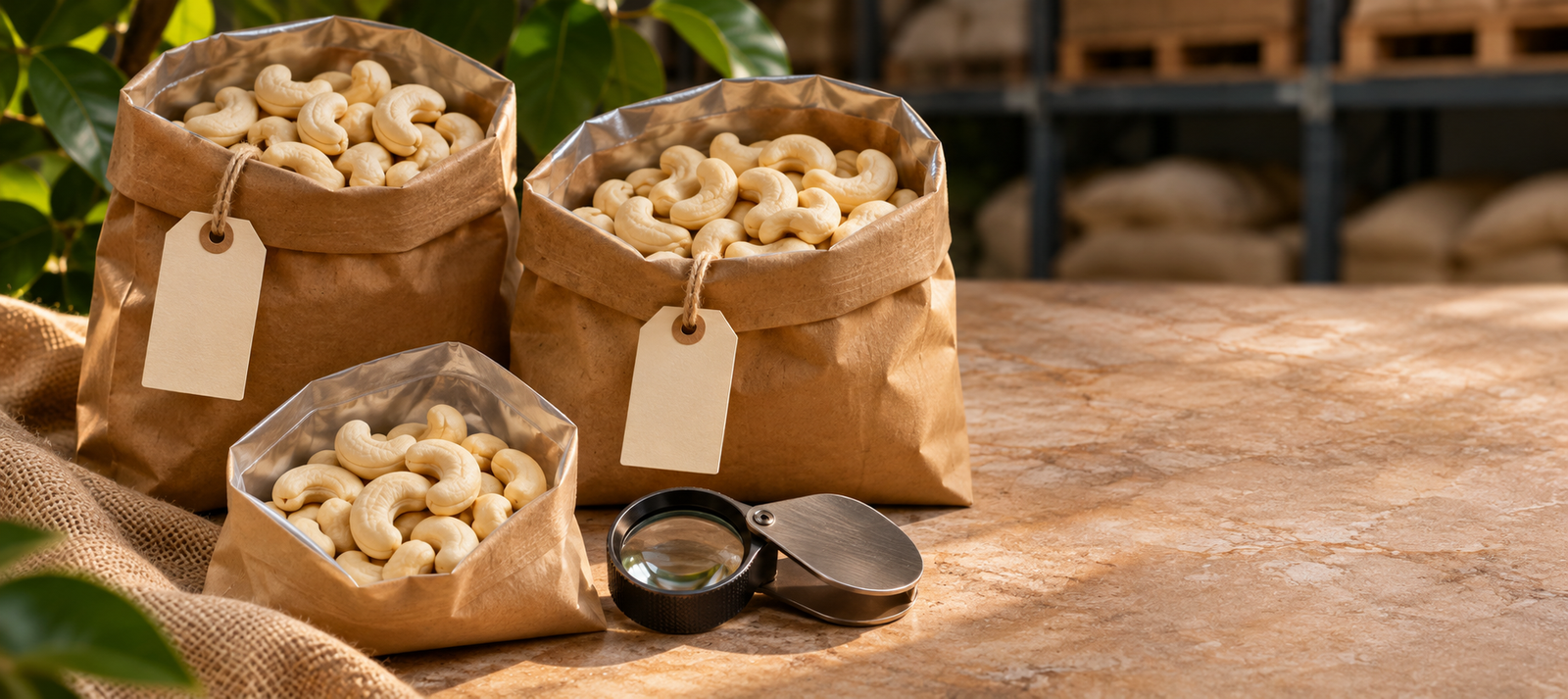
Match the batch number linked to your approved kaju sample with the number on each delivered pack. Then check the packing details to see which batch filled each pack. If a code has changed, you need a written link between the old batch and the new pack. Our advice at NutDana is to check every pack before using or selling the kaju. A W320 label alone cannot prove the kaju came from your approved batch.
What should I save when I approve a kaju sample?
Your approval should name the kaju grade and the actual batch number. W320 names a size grade. The batch number names the kaju used for your sample. Start with a sample linked to the stock offered for your order.
For a W320 sample, save its pack label, the batch number, and your approval message. Note any agreed limits for broken pieces or other quality points. If the seller has sent more than one sample, mention which one you accepted. A message reading only “W320 sample approved” leaves out the batch.
Imagine you approved W320 kaju from batch A12 for a 20 kg order. Another batch can have the same W320 grade without coming from A12.
Where is the batch number on a kaju bag or bucket?
Look for Batch No., Lot No., or Code No. on the food pack label. The number may appear on a printed sticker, pouch, bag, or bucket label. Check the lid and outer packing when the code is hard to find.
Some bulk deliveries contain smaller sealed packs inside a carton or bucket. In that case, check the codes on the inner packs and the outer label. If the numbers differ, the packing details should show how they connect. An outer carton code might name only the carton. You still need the source kaju batch.
The packing date, best-before date, order number, and batch code may appear together. Each has a different use. Two packs filled on the same date may still contain different kaju batches. If a label has only a barcode, have the seller name its batch. Some barcodes show only the product type.
How can I match the delivery with the sample?
Compare three records before mixing the kaju with your existing supply:
- Your sample approval: the accepted grade, batch number, and sample photo.
- The delivered packs: each label, batch code, pack count, and stated net weight.
- The packing or dispatch note: the batch used for each pack and the weight sent under your order.
All three should point to the approved batch. A changed packing code needs a written link to that batch. If there is no packing note, request a message listing each pack code, source batch and weight. For an order containing W320 kaju and kaju tukda, check each grade against its own sample approval.
An invoice showing “W320 kaju, 20 kg” is useful for the purchase details. Yet the same words could appear on invoices for several different batches. If the invoice includes a batch code, compare it with the packs. Otherwise, the packing record becomes more useful. A GST number identifies the seller. It cannot tell you which kaju batch arrived.
Two buckets arrived with different codes. Should I accept them?
Treat any bucket with a new code as unconfirmed until its source is shown. For example, your 20 kg order might arrive in two 10 kg buckets. You approved A12, but one bucket reads A12 and the other reads P07. The second bucket has no proven match yet.
P07 could mean a different kaju batch or a new packing code for A12. If it contains a new source batch, review a new sample. If it contains A12, the packing note should connect the two codes.
A single matching label cannot verify a full 20 kg order. Write down the weight under each code. You can then discuss the affected 10 kg without mixing it with the pack that matches.
Can repacking change the code even when the kaju is the same?
Repacking can change the code without changing the source batch. Kaju from one large batch may be divided into smaller sealed packs. The original batch may have one number, while the new packs receive another packing code.
Suppose batch A12 is packed into a 10 kg bucket marked P07. A packing entry should connect A12 to P07 and show 10 kg against your order. P07 on its own tells you very little about the original batch.
A new packing date cannot prove that the kaju batch changed or stayed the same. What counts is the written connection to the batch you approved. If the seller cannot trace P07 back to A12, the delivery remains unconfirmed. If a pack mixes kaju from two source batches, its code must link to each source. The sample you approved for A12 alone cannot cover a mixed batch.
What if my sample had no batch number?
A sample without a batch number leaves you with no firm number to compare at delivery. Contact the seller with the sample photo and approval message. Request the batch that supplied that sample, along with a written reference connecting the two.
If the seller cannot name the sample batch, appearance alone cannot prove a later match. You can still compare size and visible quality, but those checks answer a different question. For a fresh order, choose a sample with a known batch reference before approving the full quantity.
If the packs have arrived, leave the questioned ones unopened while the seller checks their source. Opening every pack or pouring the kaju into a common bin removes useful evidence.
What if the approved batch sold out before dispatch?
Sample approval reserves a batch only if the seller agreed to hold it. Check how long the approved batch can be held. If it sells out, new W320 stock may come from another batch.
We recommend reviewing a new sample before accepting a batch change. Check the size, whole and broken pieces, colour, and other quality points agreed in the order. Have the new batch number added to your approval message. Approval of A12 covers A12 alone.
The numbers match, but the kaju looks different. What now?
A matching batch code helps trace the goods. It cannot prove that the kaju reached your Delhi shop in good shape. Packing, transport, and storage can affect a shipment after the sample was approved.
Photograph the seals before opening the packs. Once the labels match, compare a small amount from more than one pack with your approved sample. Look at the size, whole and broken pieces, unusual marks, and smell. A pack containing far more broken kaju than agreed needs attention, even with the right batch code.
Visible mould, insects, an unusual smell, or a damaged seal deserves a separate check. Avoid tasting kaju with signs of spoilage. A hand check also cannot measure moisture or prove food safety. If the condition appears unsafe, leave the affected goods unused while the issue is reviewed.
What should I do when the delivery driver wants a signature?
Check the pack count, outer seals, and visible labels before signing, where possible. A quick look at the outside cannot replace an inner-pack check. When a code differs, photograph it while the original packing is still intact.
If the delivery slip has a remarks space, write the specific problem. For example, write “One 10 kg bucket marked P07; approved batch A12.” If full checks must happen later, note “Received packs; batch check pending” where allowed. The note alone cannot change your payment or claim rights.
If the driver has no remarks option, send the seller a dated message with the label photos. Avoid signing a statement that the full quality check is complete when you have only counted the packs. Check the delivery terms for how problems must be reported.
What proof should I send if a batch code differs?
Send NutDana your sample message, invoice, pack-label photos, and any packing note. Mention the exact code on the questioned pack and its stated weight. Add a seal photo if the packing appears damaged.
Separate the questioned kaju from goods already used in your shop or kitchen. Retain the original label and packing. If only one bucket has a different code, identify that bucket in your message. A photo of loose kaju cannot show which sealed pack supplied it.
A written reply should name the original batch, delivered code and packed weight. Without a link between them, the source remains unknown. Before deciding on use or return, check the agreed order terms.
What should I tell NutDana before my next Delhi delivery?
Before dispatch, send us the grade, order quantity, approved sample photo, and batch reference. Mention any agreed limit for broken pieces. Request the batch details for each pack, particularly if your order will arrive in several buckets or bags.
For a delivery question, write exactly which pack differs. For example: “I approved W320 batch A12 for 20 kg. One 10 kg bucket shows A12, but the second shows P07. Please check which source batch filled P07 and share the packing details. I have set that bucket aside.”
Our advice is to resolve the code difference before adding the kaju to your shop stock or mithai production. Each pack should link to the sample you chose.