 W180
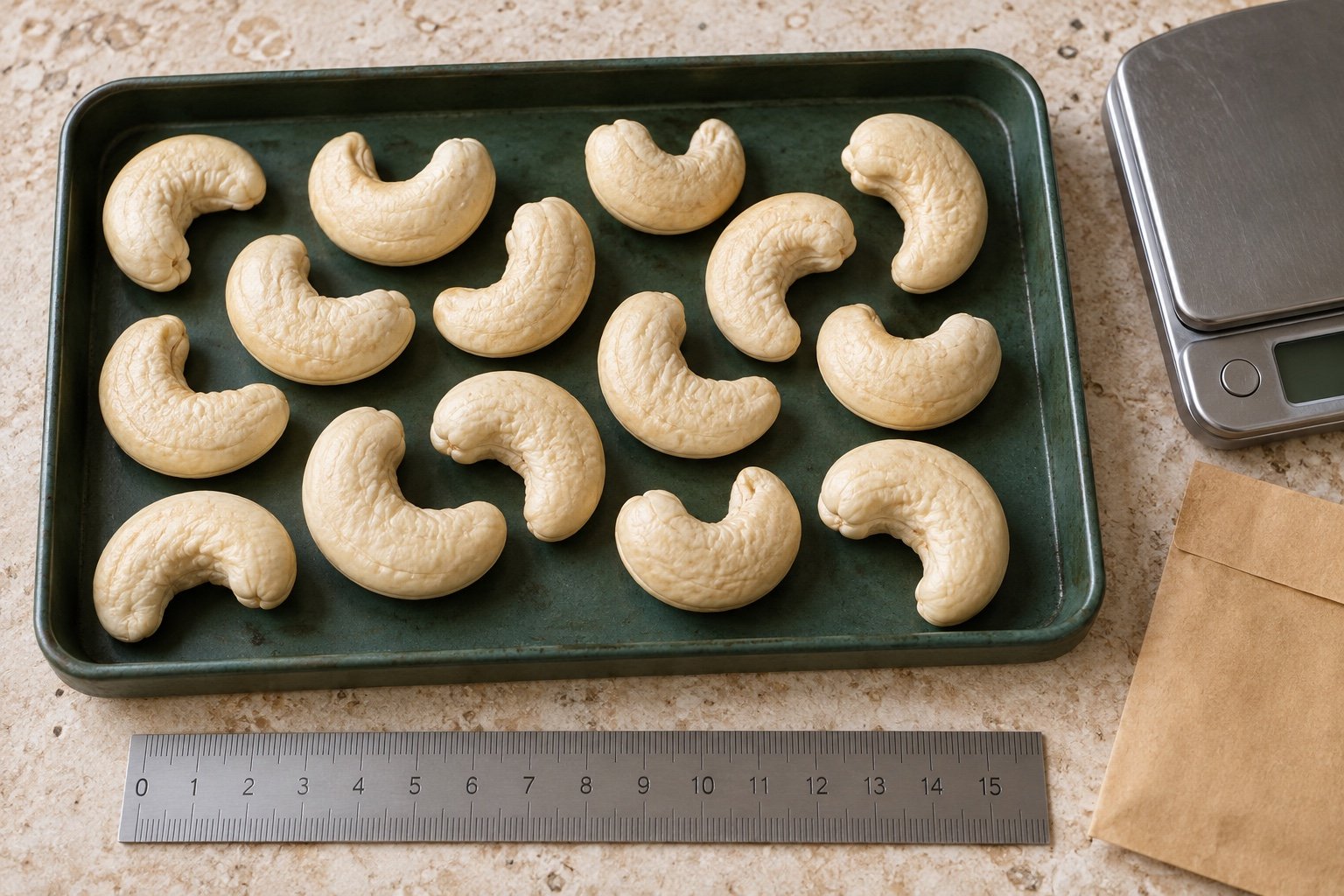
W180 Cashew Wholesale Price
₹1,050–₹1,200 per kg
Minimum order 10 kg · GST included
Best forWedding gift boxes and showpiece trays
- Kernels per kg
- 265–395
- Kernel length
- 23–25 mm
- Rate at 250 kg
- ₹1,030–₹1,180
- Kernel type
- White whole

Kaju wholesale Delhi · Whole kaju and tukda kaju
We supply whole kaju and kaju tukda to Delhi shops, restaurants, hotels and caterers. Wholesale kaju prices range from ₹650 to ₹1,200 per kg, with GST included. Order from 10 kg per grade, and mix grades in one delivery.
Send your grade, kilograms and delivery PIN code. We reply with a written rate on WhatsApp or email.
Cashew supplier in Delhi
We sell cashew kernels in bulk to Delhi businesses that resell, cook or pack them. Choose from six whole grades, W180 to W450, and four kaju tukda grades. One order can mix grades and still arrive as one delivery.
Many kernels reach Delhi from processing hubs in Kollam, Kerala, about 2,700 km away. As your cashew supplier, we quote the Delhi rate, GST and freight upfront.
Khari Baoli kaju rate
A Khari Baoli counter rate looks cheap until you add the trip. Many counter rates leave out GST, and some bills weigh the bag with the kernels. You then pay porters, a handcart and a tempo to reach your shop. We deliver straight to your shop, restaurant or hotel door. Always compare the landed cost per kg, which counts every extra charge.
Take a counter rate of ₹880 per kg for loose W320. Add 5% GST, and the same kilo costs ₹924 before any transport. Our W320 rate of ₹900 to ₹940 already includes GST.
Holding a lower written quote from another dry fruit wholesaler? Send it on WhatsApp with the grade and kilograms. We beat that rate and confirm the new price in writing. Each order gets the price match or a bulk discount, never both.
Whole kaju price list
The whole kaju price per kg in Delhi ranges from ₹800 to ₹1,200, GST included. W320, the most traded grade, sells at ₹900 to ₹940. Check the 250 kg column for your bulk rate on each grade.
W180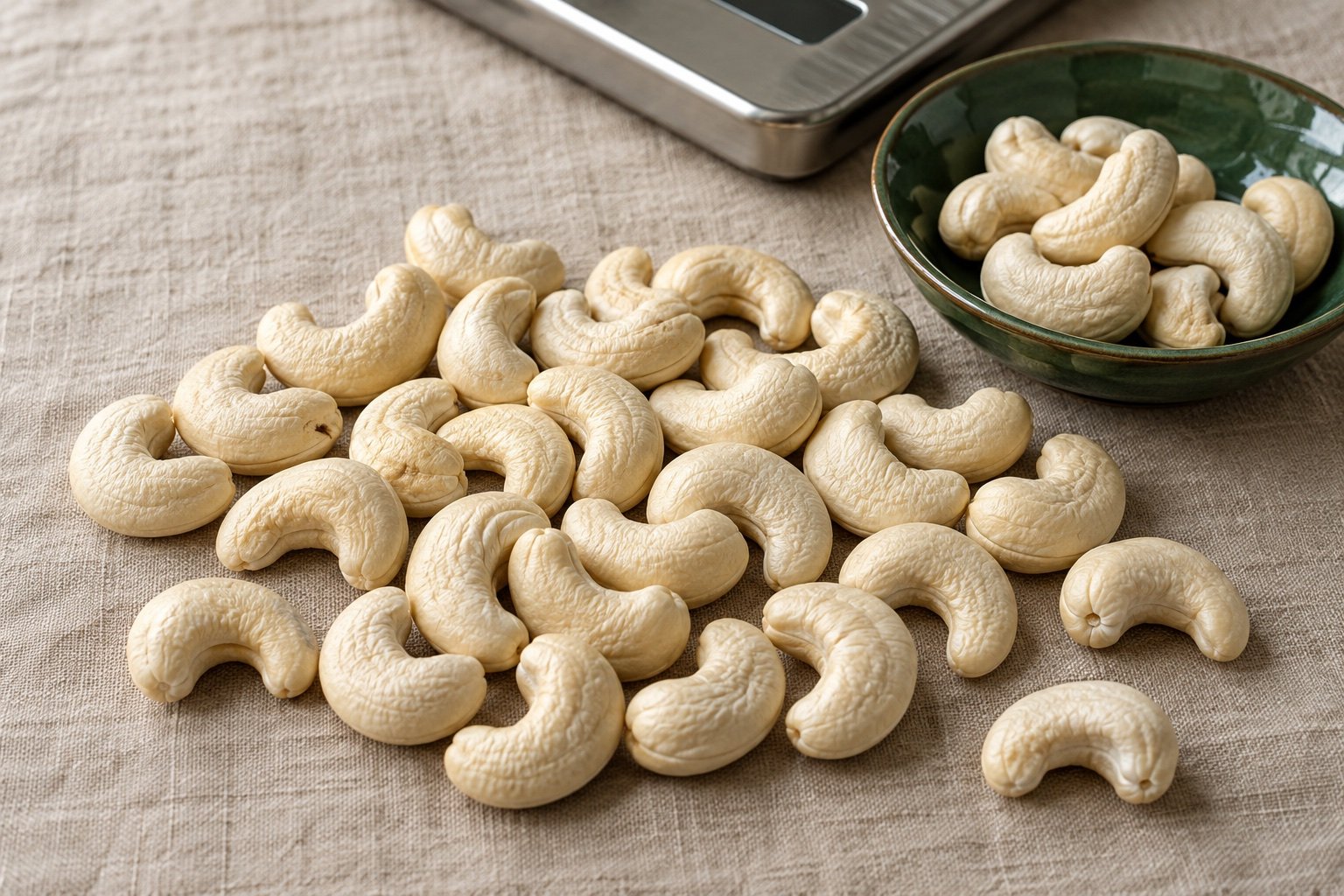 W210
 W240
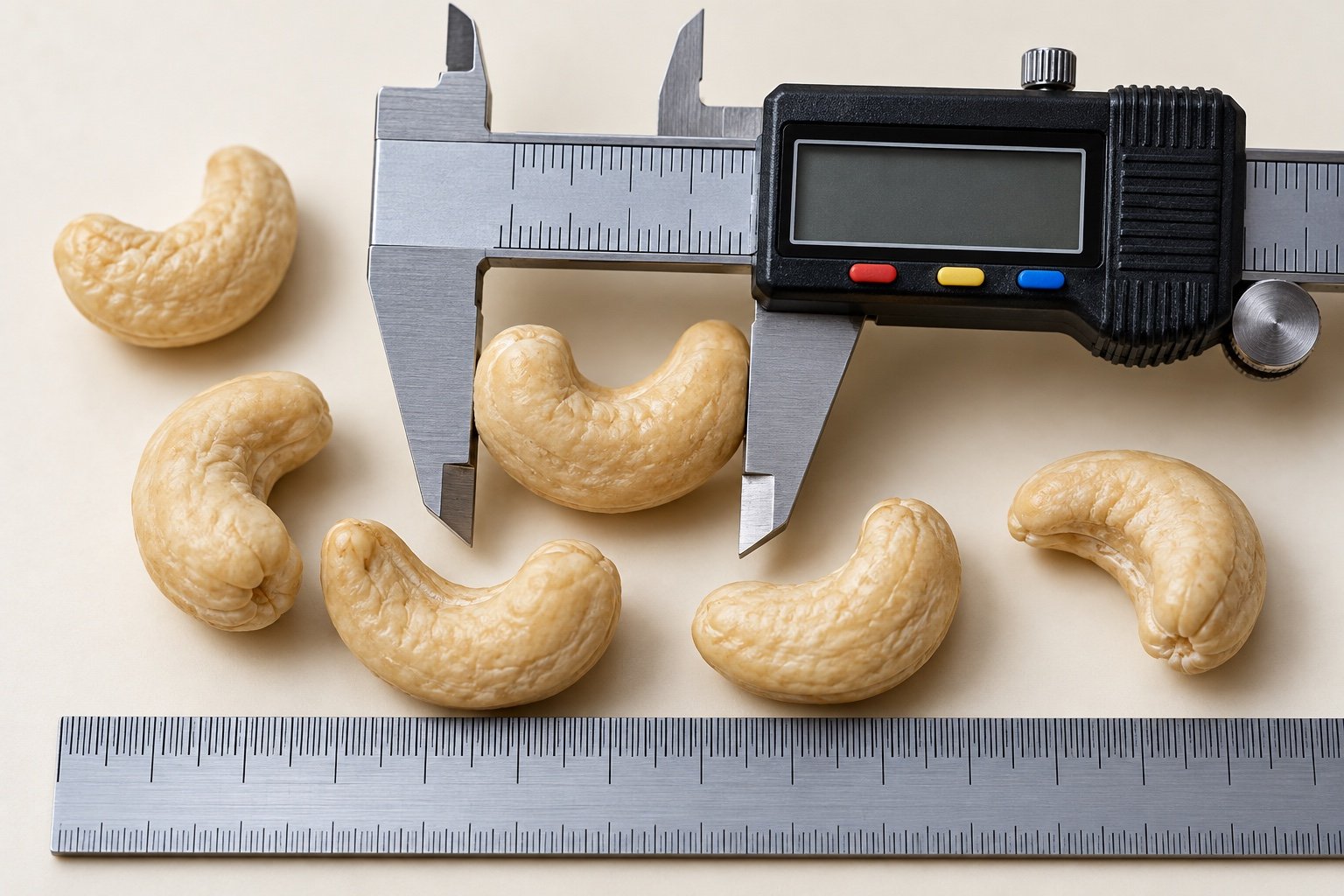 W320
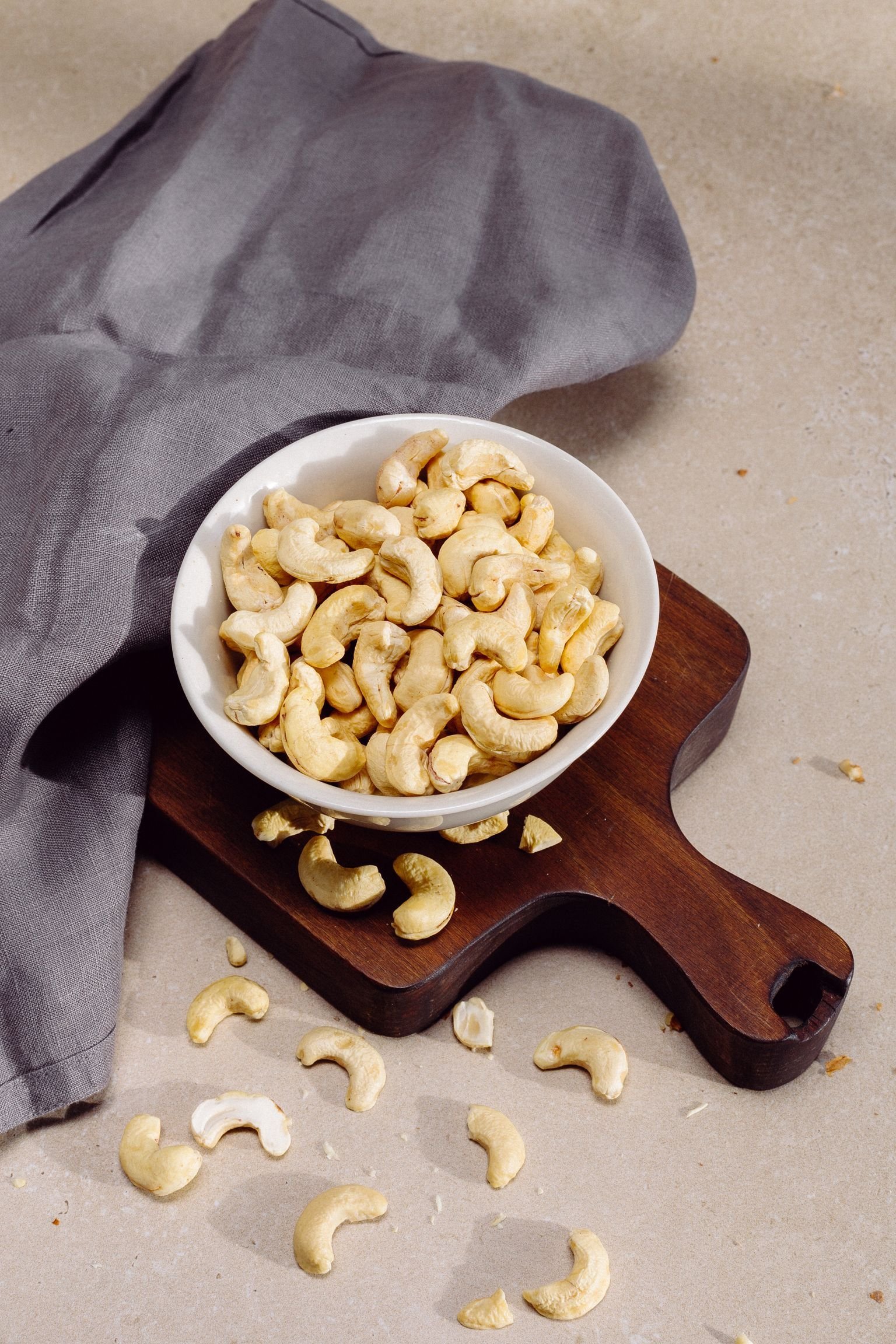 W400
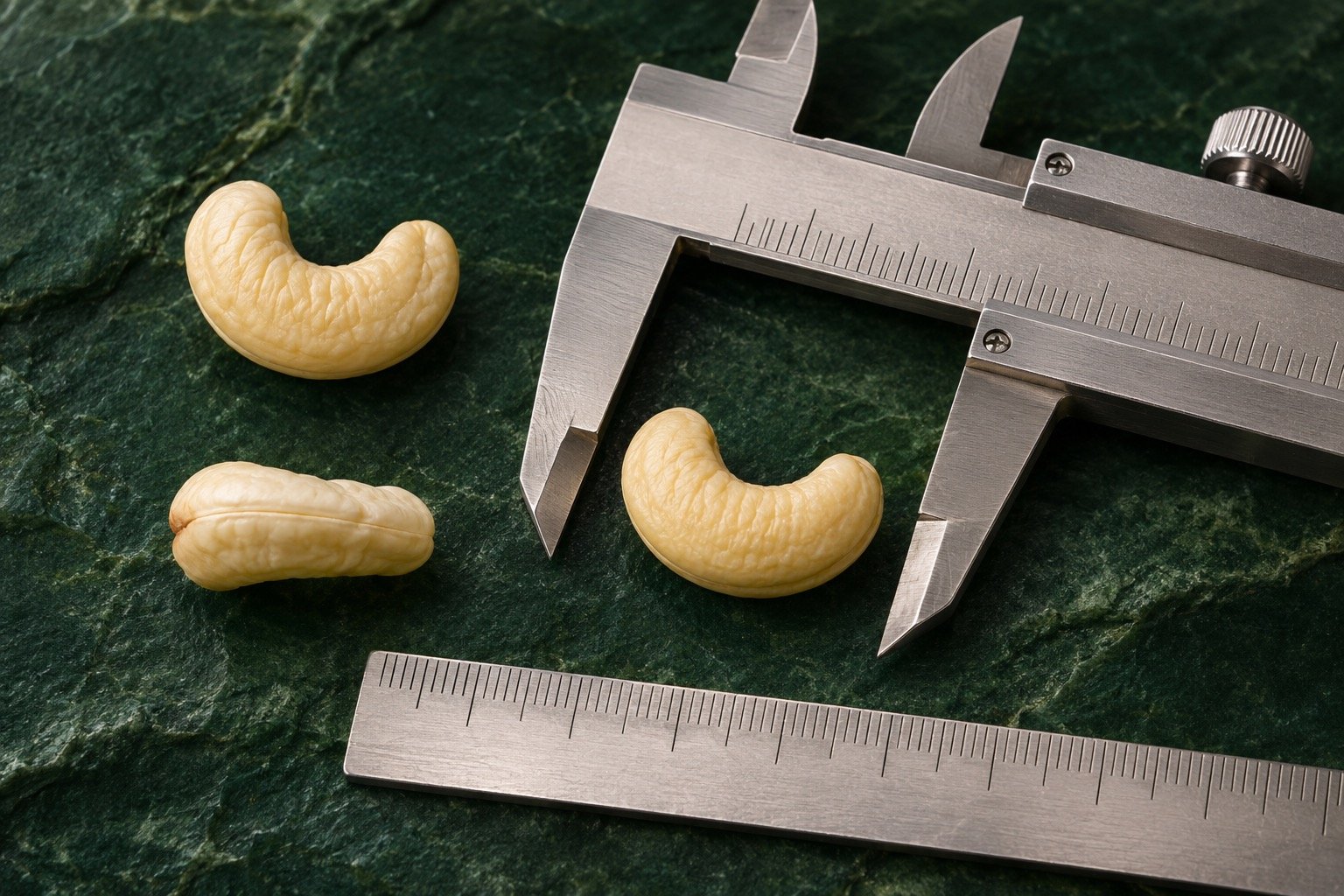 W450
Choose your grade
Pick the grade your customer can see, and save money where they cannot.

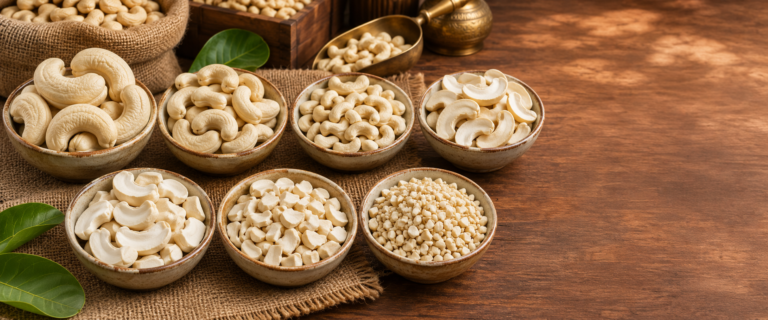
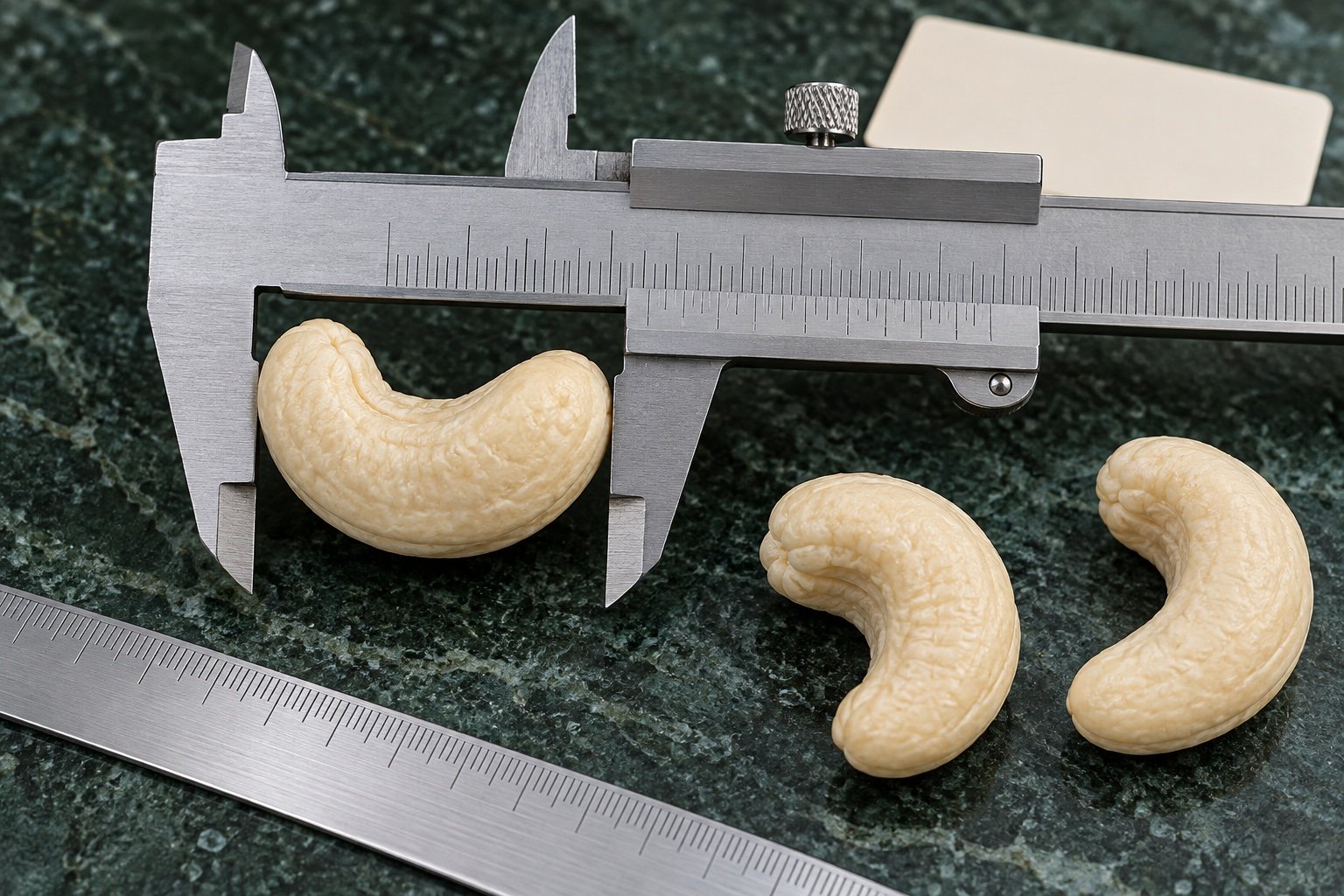
W marks white whole kernels, and the number shows the kernel count per pound. A pound of W320 holds 300 to 320 kernels. Fewer kernels per pound bring bigger nuts and a higher price. Our price table converts each count into kernels per kg. The kernel count article works out the numbers for every grade.
Stock W240 for gift boxes and display jars, where size sells. W320 costs about ₹50 less per kg and suits loose counter sales. Many Delhi dry fruit shops stock both, at two price points. Read the full W180, W240 and W320 comparison before a large order.
Jumbo W180 and W210 pay off in wedding trays and premium gift boxes. Buyers open those boxes, and kernel size makes the first impression. For loose counter sales, a jumbo grade seldom repays its higher price.
Yes, W450 tastes like W180 and costs far less per kg. Halwais use it in kheer, pulao and sweet toppings, where size hardly shows.
Kaju tukda rates
Kaju tukda costs ₹650 to ₹850 per kg in Delhi, GST included. Tukda is the trade name for cashew pieces that break during shelling and peeling. Taste and nutrition match whole kernels from the same lot. The more your recipe hides the cashew, the smaller the cut you can buy. Our splits, LWP and SWP comparison lines up all four cuts.

Each kernel splits lengthwise into two halves with the full curve intact. Check the share of chipped halves in the sample.

Every JK kernel breaks into about four chunky pieces with firm edges.

LWP pieces measure smaller than JK, at roughly eight per kernel. Shake the sample bag and check how much powder settles at the bottom. Powder adds weight without adding usable pieces.

SWP covers small white pieces, and BB covers baby bits. Both cuts share one price on our list. Baby bits come out smaller, almost like coarse grit. Grind either one when the cashew must vanish into a paste.
Bulk kaju discount
Your per-kg rate drops once one grade crosses 100, 250 or 500 kg. Each grade counts its own kilograms inside a mixed order. Choose a grade and quantity below to see the bulk cashew rate.
An order of 250 kg of W320 costs ₹2,20,000 to ₹2,30,000 in total. At 500 kg, the same grade drops another ₹10 per kg.
Grades for each business
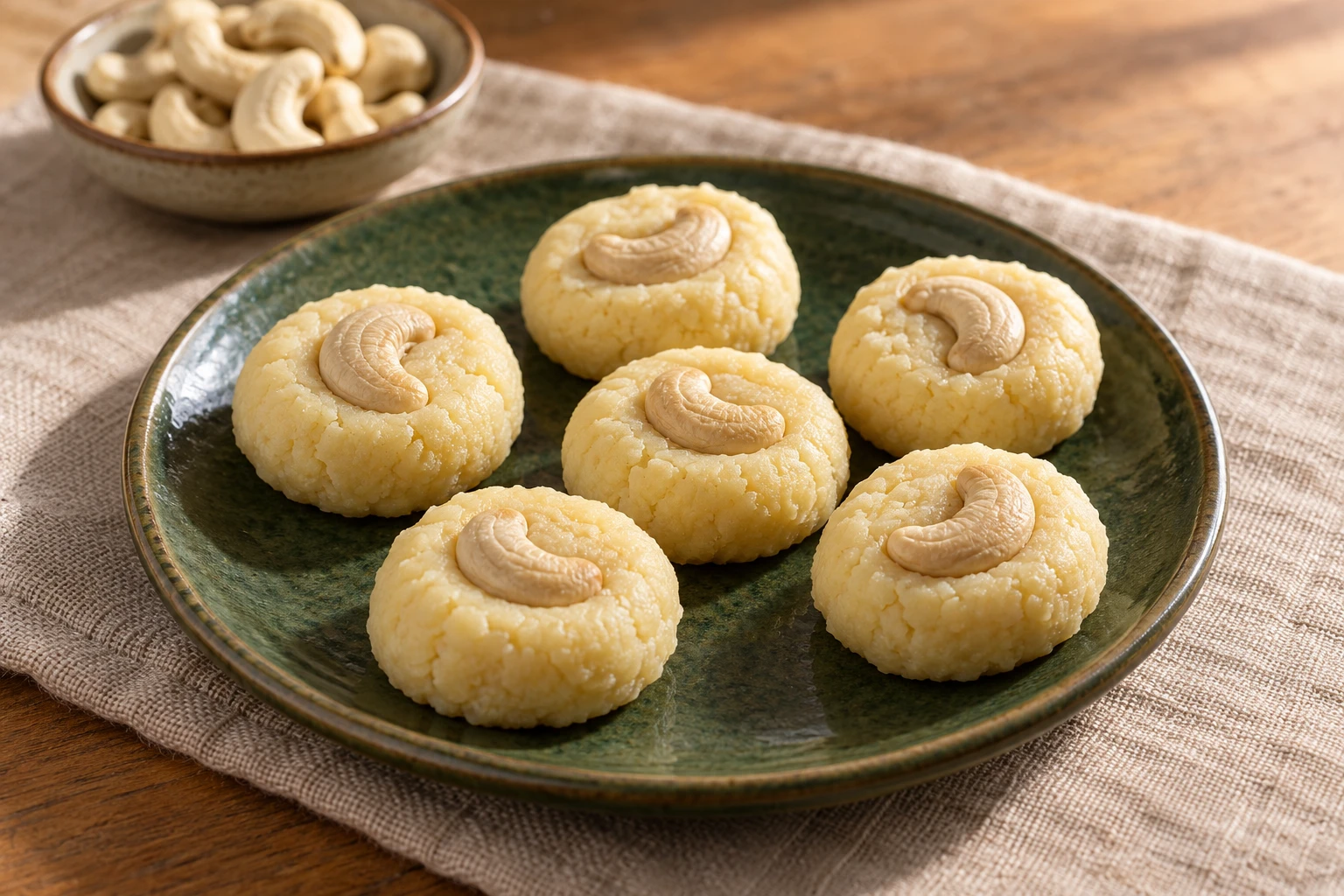
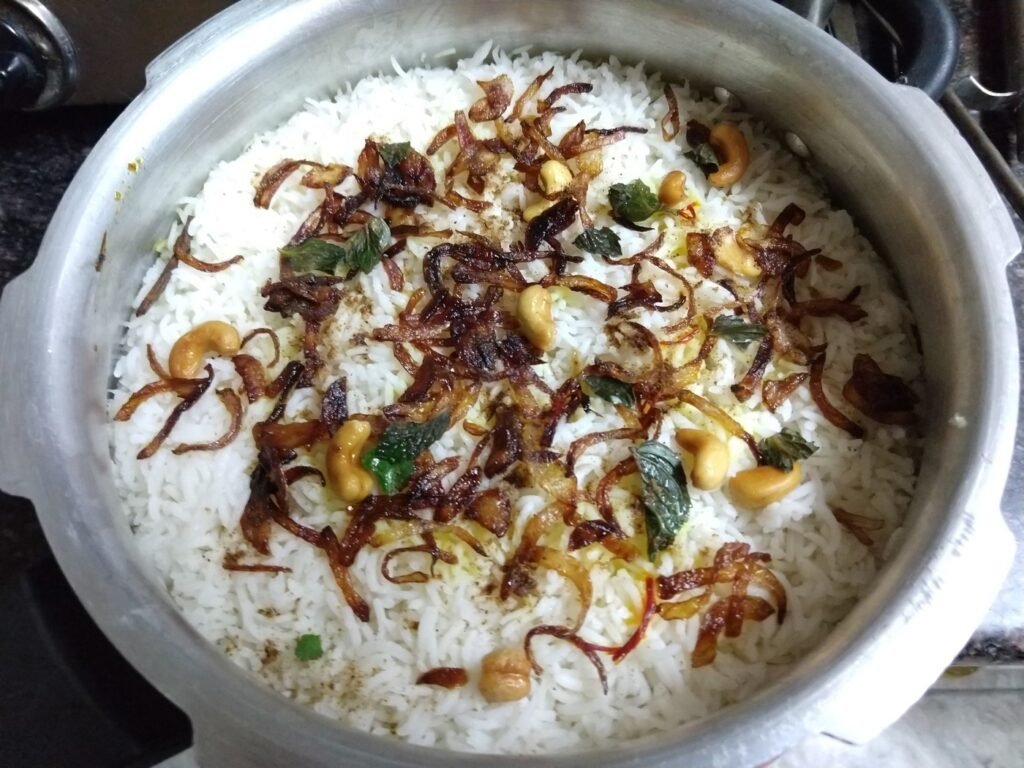
Kaju katli and kaju barfi start from ground cashew, where kernel shape disappears. LWP and SWP bring the same flavour for less per kilo. For garnish, press JH halves on top of every mithai tray you sell. Order a fresh bucket each week, since ground cashew loses aroma quickly. Karol Bagh sweet shops pack kaju katli boxes for Diwali and Bhai Dooj gifting.
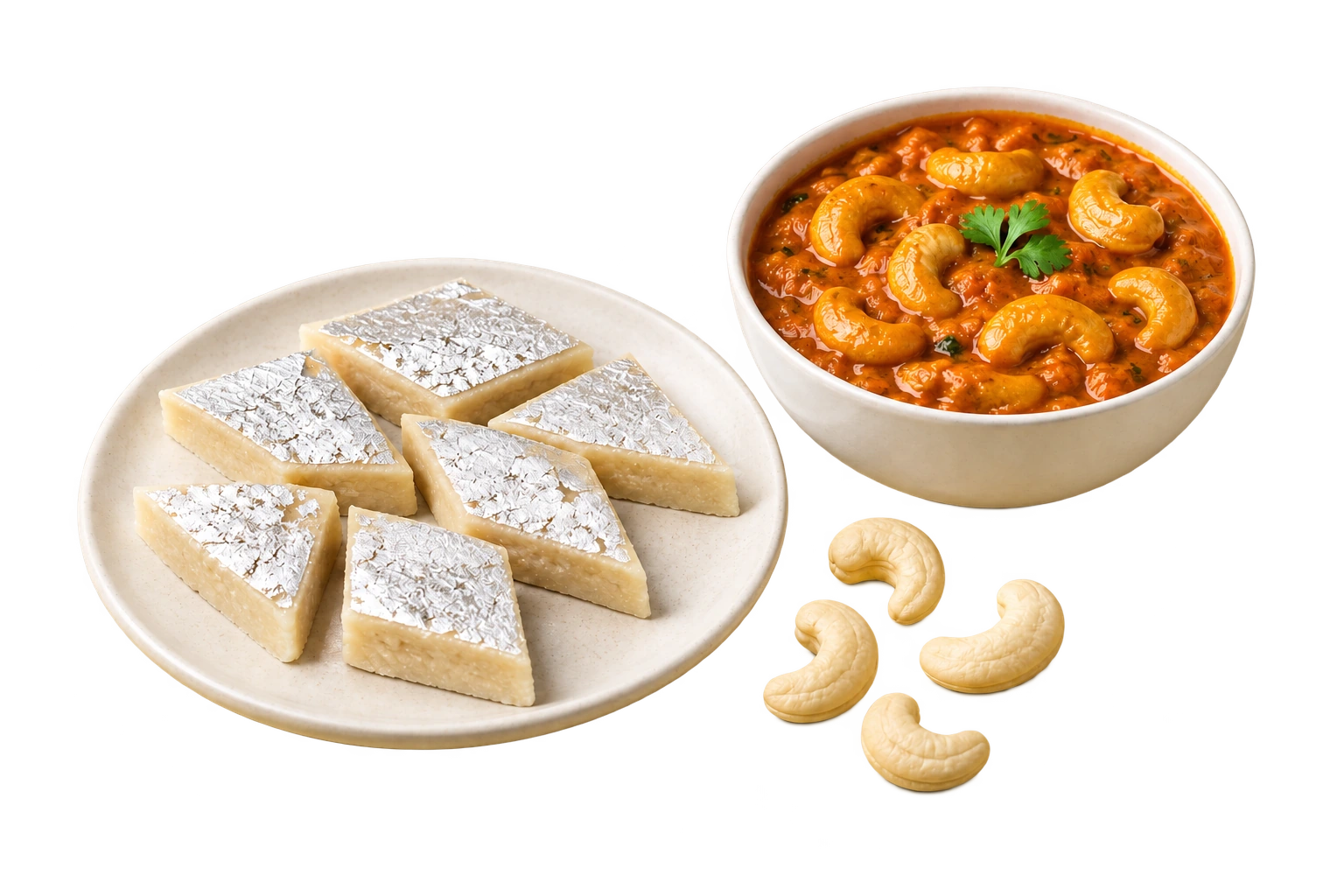
Shahi paneer, malai kofta and korma all thicken on soaked cashew paste. LWP and baby bits grind smooth at a lower kilo rate. For hotel welcome bowls, whole W210 looks generous at the reception desk. Paharganj hotels near New Delhi Railway Station need smaller, frequent lots.
CAIT estimates about 4.8 lakh Delhi weddings in a single wedding season. Banquet kitchens in Rajouri Garden and Chhatarpur farmhouses cook kaju gravy in bulk. Book LWP or baby bits monthly, from late November through March.

A Diwali gift box sells on the size of each kernel. W180 and W210 fill the top tier of hamper trays. W240 and W320 move well in 250 g and 500 g counter pouches. Lajpat Nagar and Sarojini Nagar counters sell many kaju packs before festivals. Repack from the bucket into pouches within a week for the best crunch. All four grades can share one quote and one delivery.
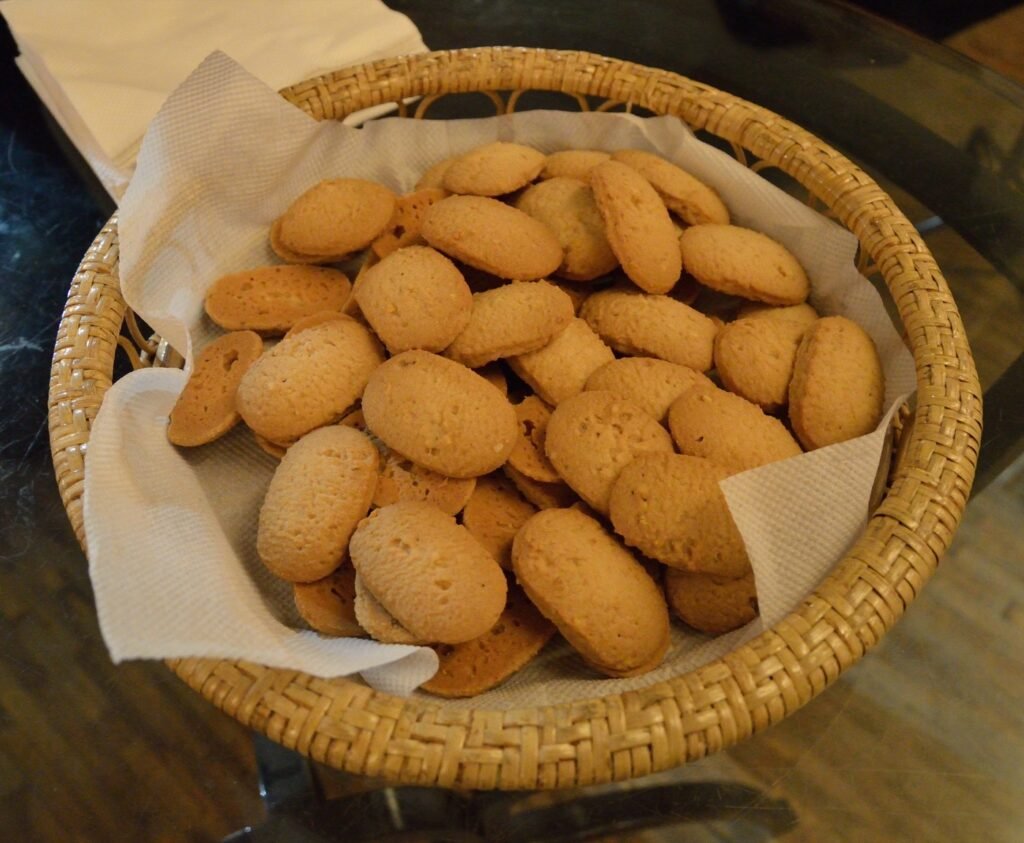
Delhi dry fruit markets
The wholesale kaju market in Delhi centres on the Old Delhi belt near Fatehpuri Masjid. Each market below serves a different kind of buyer.
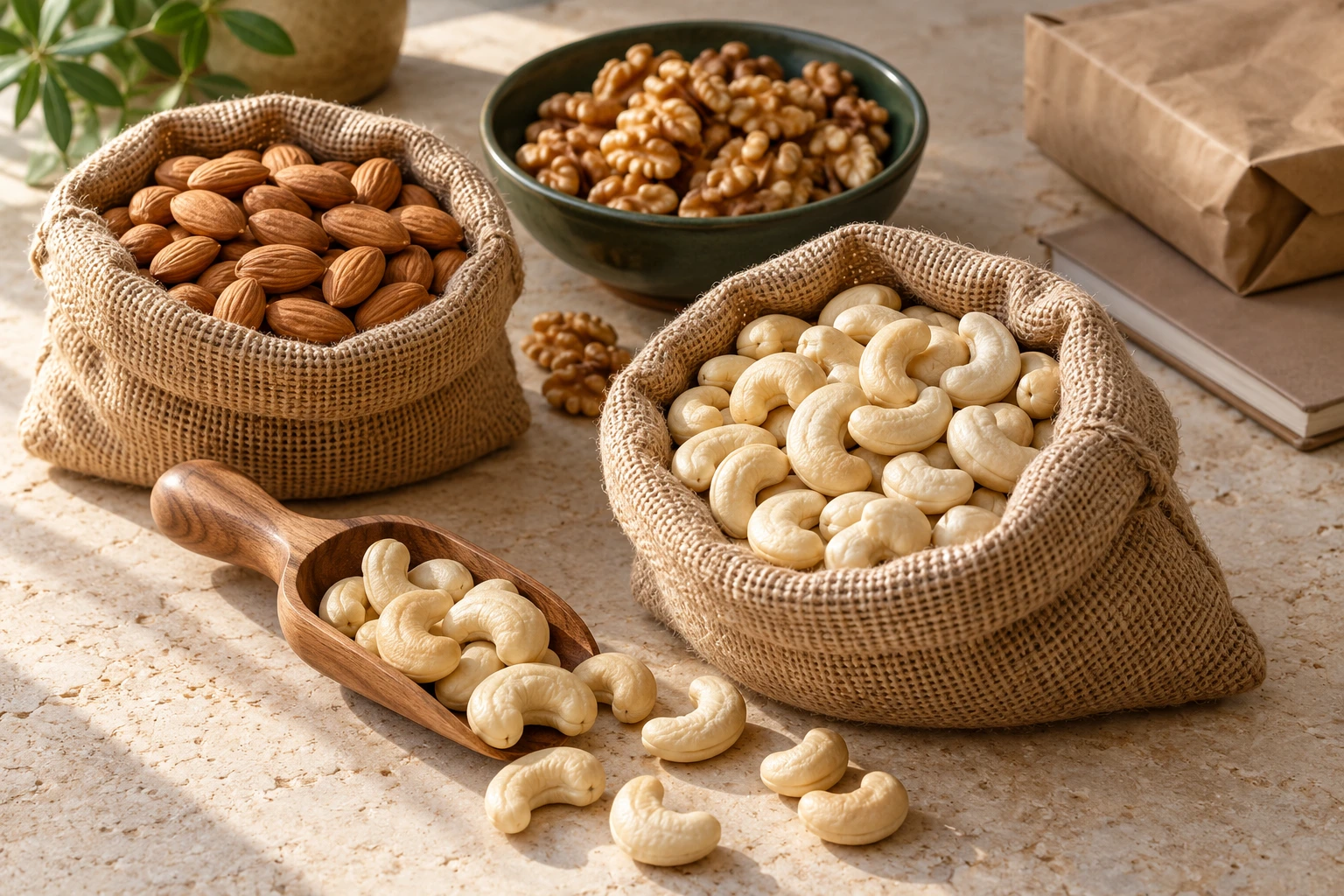
Khari Baoli has traded spices, nuts and dry fruit since the seventeenth century. Many call it the largest wholesale spice market in Asia. Seth Lakshmi Narain Gadodia built Gadodia Market here in the 1920s. Shops here weigh loose kaju straight from jute sacks for walk-in traders and resellers. Buyers then pay porters and handcart charges for the trip out.
Fatehpuri Masjid marks the western end of Chandni Chowk, beside Khari Baoli. Shops along the road sell loose kaju and boxed dry fruit to shoppers and halwais. Narrow shopfronts hold little stock, which makes weekly reorders common. Owners fetch fresh stock from Khari Baoli on foot or with a handcart.
Sadar Bazar ranks among the busiest general wholesale markets in Delhi. Its gift box and packaging traders get busy before Diwali. Hamper firms buy empty boxes here, then fill them with W180 or W240.
These neighbourhood markets sell to households, one small pack at a time.
Delivery across Delhi
We dispatch within 3 to 5 days of order confirmation. Below 250 kg of one grade, your quote lists freight for the PIN code. From 250 kg, delivery anywhere in Delhi costs nothing.
Old Delhi lanes need a receiving time and a side-road drop point. Add a landmark such as Fatehpuri Masjid or Lahori Gate.
Okhla, Bawana and Narela units can add a gate number and receiving hours.

Before you pay
We send a sample or batch photo before you pay for bulk. Test it on the four points below. Ask us for the packing date, origin country and processing site too. Our bulk cashew quality checklist covers every test in more depth. For moisture, follow the cashew moisture check before signing off a large lot.
Whole white grades show an even ivory shade. Yellow tint or a polished shine can signal old or treated stock. Black spots or grey tips point to damp storage.
A dry kernel snaps cleanly when you bend it. Kernels above the 5% moisture limit bend, and they spoil sooner in Delhi humidity.
Fresh kernels smell mild and faintly sweet, never sour, musty or oily.
Weigh one bucket, then subtract the empty bucket weight. Match that net weight with the figure on your quote. Read the packing date on each lid. Count the buckets before the delivery vehicle leaves.
Packing
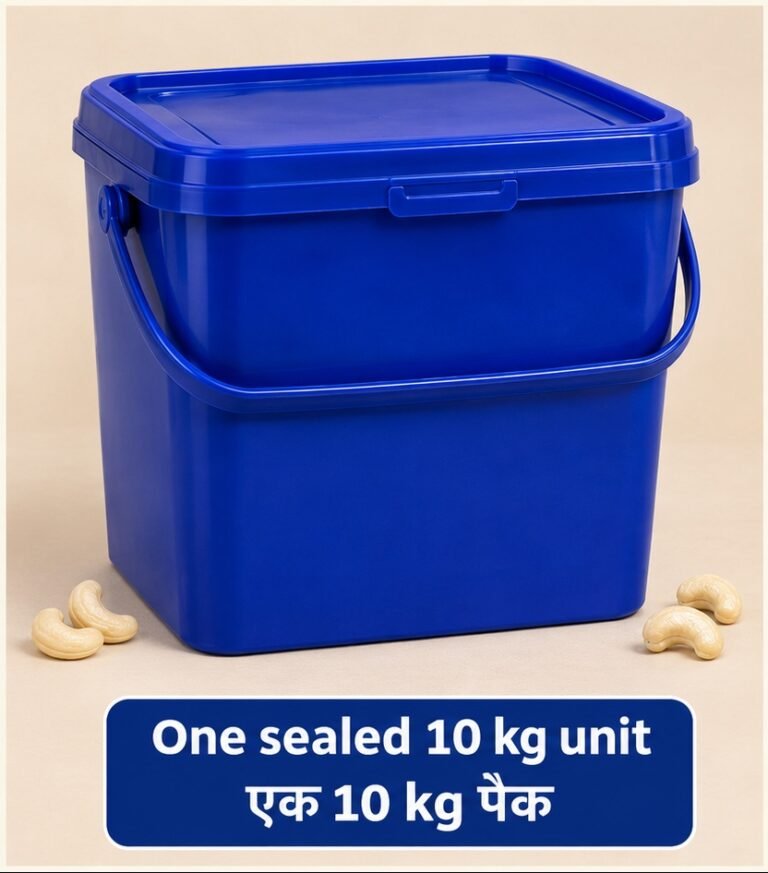
Every Delhi order ships in 10 kg buckets with resealable lids. Your quote shows the packing charge as its own line.
Each bucket comes with a lid you can reclose. Restaurants and hotels dip into one daily without tearing open a bag. Cooks scoop out a single day of paste stock, then press the lid shut. Shops refill counter jars straight from the bucket.
Store buckets off the floor, away from walls that sweat in monsoon. Close the lid fully after every scoop. Delhi summers can cross 45°C, and a cool storeroom protects flavour.
How to order
A Delhi order moves from first message to your door in about a week.
Send grade, kilograms, pack and delivery PIN on the form or WhatsApp. Add the date you need stock in hand.
The quote lists kernel price, GST, packing and freight on separate lines. Each quoted rate holds for 24 hours. Raw nut prices move, and the 24-hour window protects both sides.
Ask us for a sample or batch photo of your quoted lot. Check colour, size and broken share against your recipe or shelf. Reject the lot if colour or moisture misses your limit. Confirm the order in writing once the lot passes.
Buckets arrive at your shop, restaurant or godown on the agreed date. Count the buckets and sign the delivery note. If a bucket arrives damaged, send photos and the damaged count on WhatsApp. On a repeat order, quote the last order reference for matching kernels. You pay as per the terms in your written quote.
Buyer questions
Straight answers to what Delhi buyers ask before a first order.
Cashew buying articles
Each article answers one buying question in more depth.
Delhi NCR supply area
NutDana focuses on Delhi, Noida, Greater Noida, Faridabad, Ghaziabad and Gurgaon. For another NCR delivery address, share your PIN code so we can confirm service in writing.
Talk to our cashew desk about grades, samples or a repeat order. Message us on WhatsApp, or ask for a call back below.
Kaju facts
Khari Baoli has traded spices, nuts and dry fruit since the seventeenth century.
India eats more cashew kernels than any other country.
Indian cashew prices peak in the lean months, July to October.
Delhi saw about 4.8 lakh weddings in a single wedding season.
Indian factories now import more raw cashew than India grows.
Cashew kernels attract 5% GST under HSN 0801.