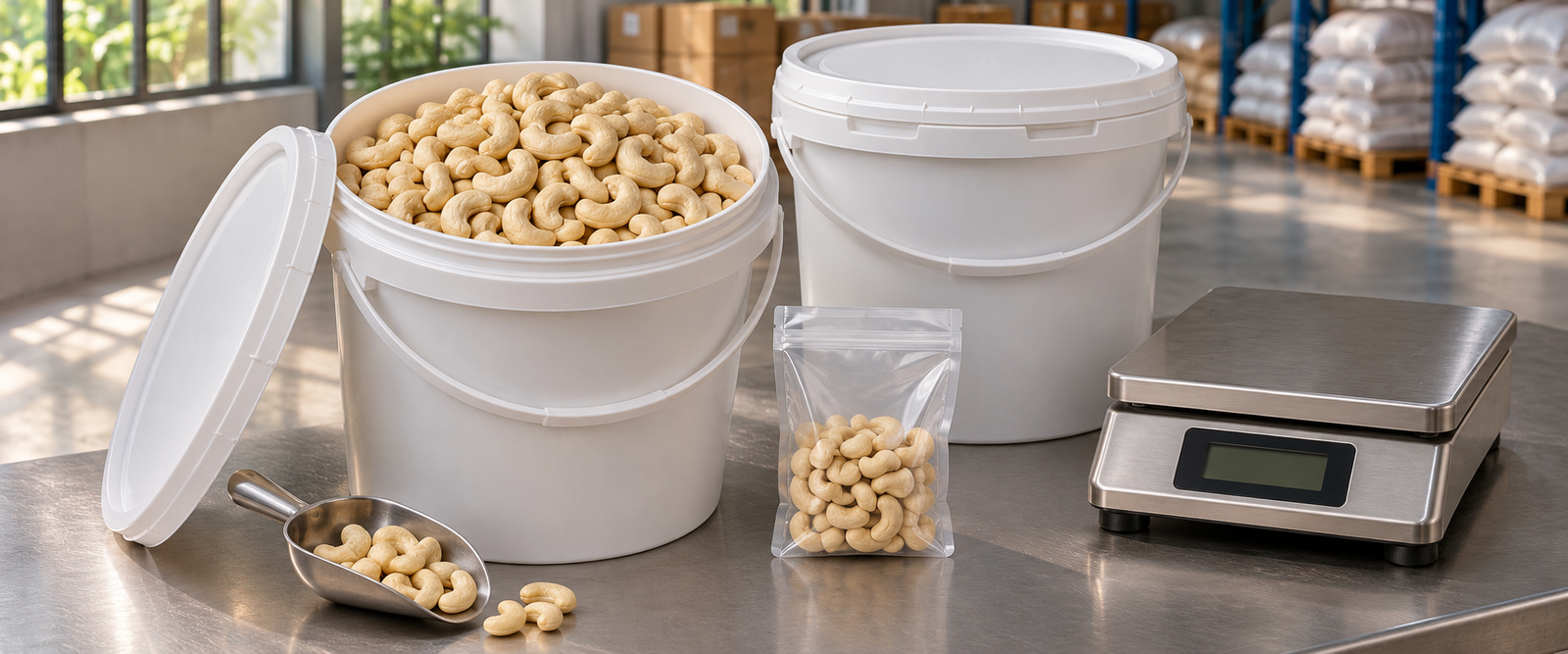
When bulk kaju arrives, count the buckets and check each seal, batch label and invoice before signing. Weigh every sealed bucket, then open one per grade to inspect the kernels. Record any shortage or damage on the delivery slip while the driver is present.
Before paying an online kaju seller, verify the GSTIN and FSSAI number on government sites, confirm the WhatsApp contact with the business, match the bank account name, and see the stock live. Pay for a sample first, then agree each advance and dispatch milestone in writing.

For 10 kg or more of one cashew grade, a direct supplier can offer a same-lot sample and written delivered quote. B2B listing sites help find sellers; buying apps suit small top-ups. Compare who receives payment, handles disputes and confirms the batch before you choose.

Before visiting a kaju wholesaler in Delhi, confirm the grade, kilos, one-lot stock, minimum order, GST-inclusive rate, bill, payment method, loading point and opening hours. Get the answers in writing so your shop visit ends with the stock and total you expected.
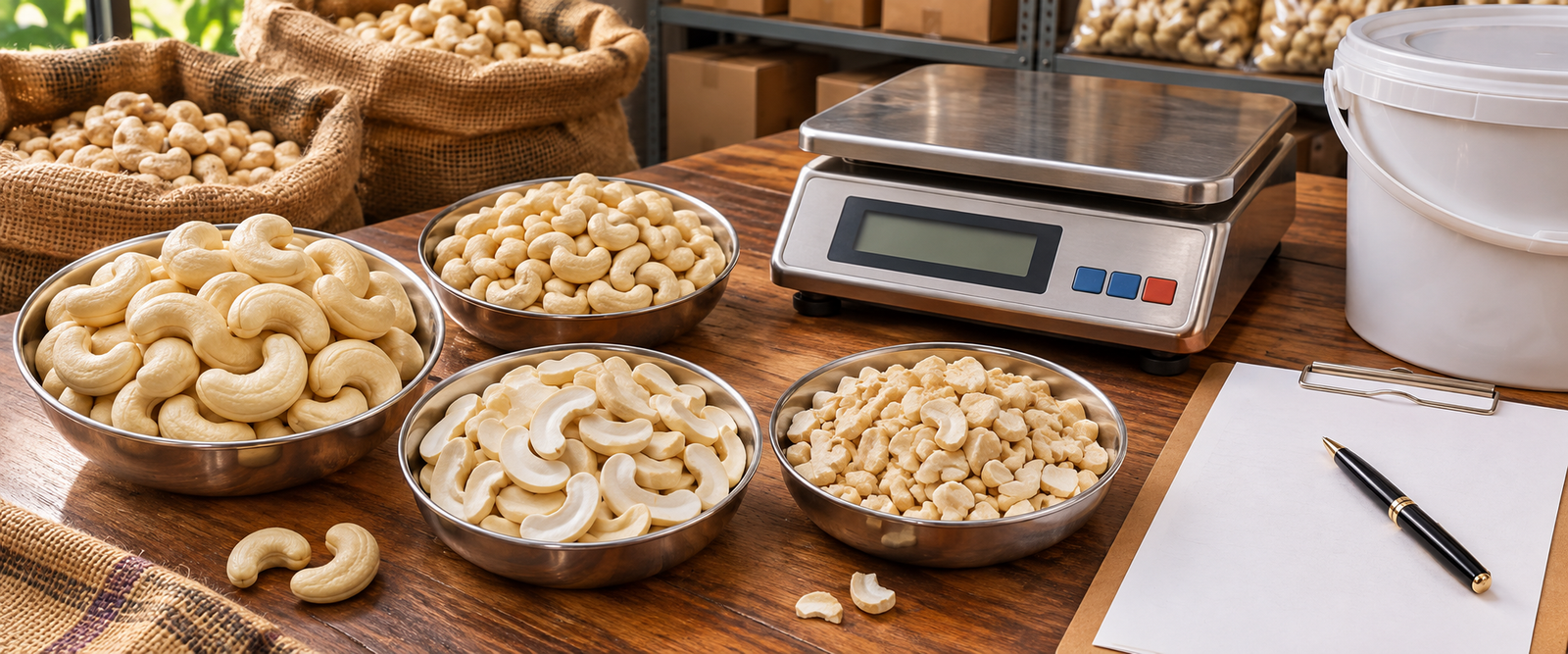
Estimate each bulk kaju grade with its price per kilo minus the grade’s discount, multiplied by the kilos ordered. Add freight and packing once to the order total. Our Delhi rates already include 5% GST, so do not add tax again.
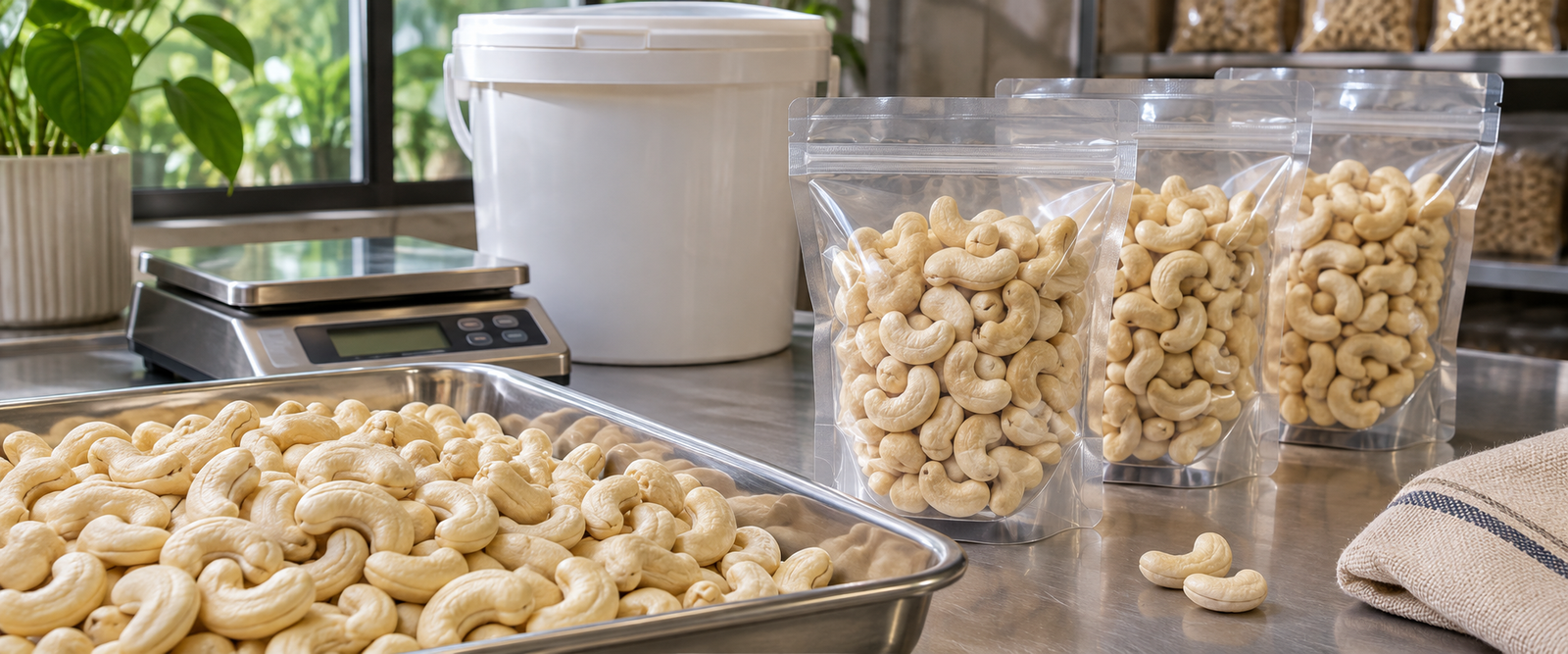
To source wholesale cashews for a private label kaju brand, buy one grade first and test it in a small trial lot. Choose a supplier who sends a GST tax invoice, a lot code and a packing date with every order.
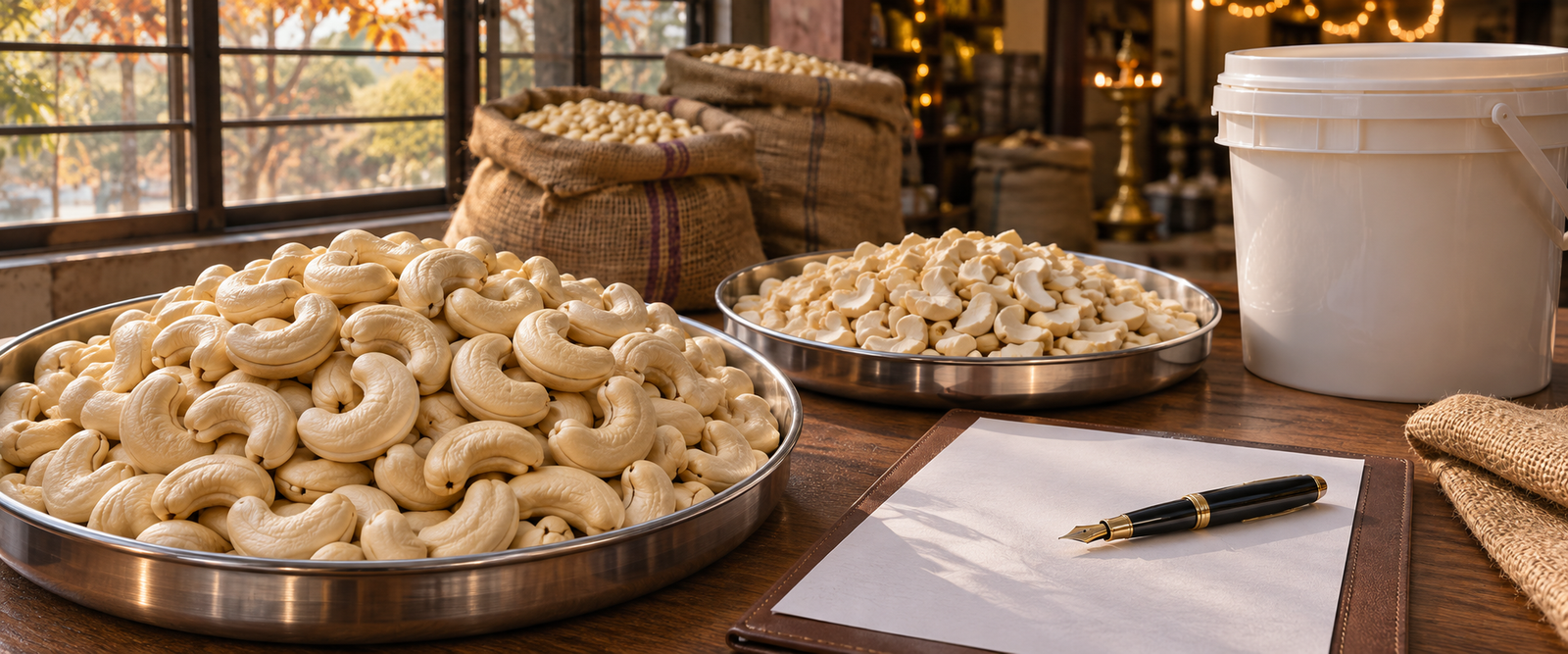
The best time to buy wholesale cashews falls in two windows. The first is mid November to mid January, after Diwali. The second is March to May, when the new crop comes in.
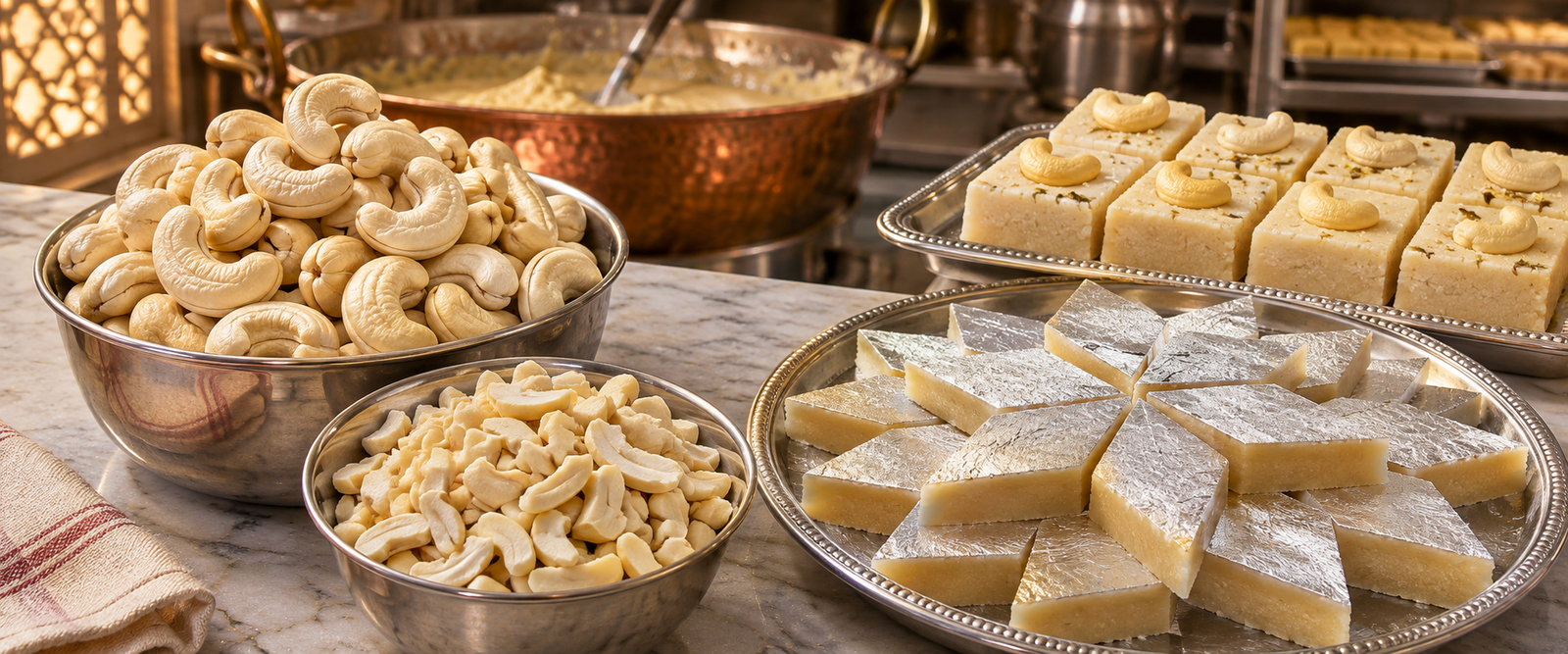
Most Delhi sweet shops need three cashew grades for daily mithai. Use LWP for paste and fried chunks, SWP or baby bits for kheer and kulfi, and JH halves for toppings.
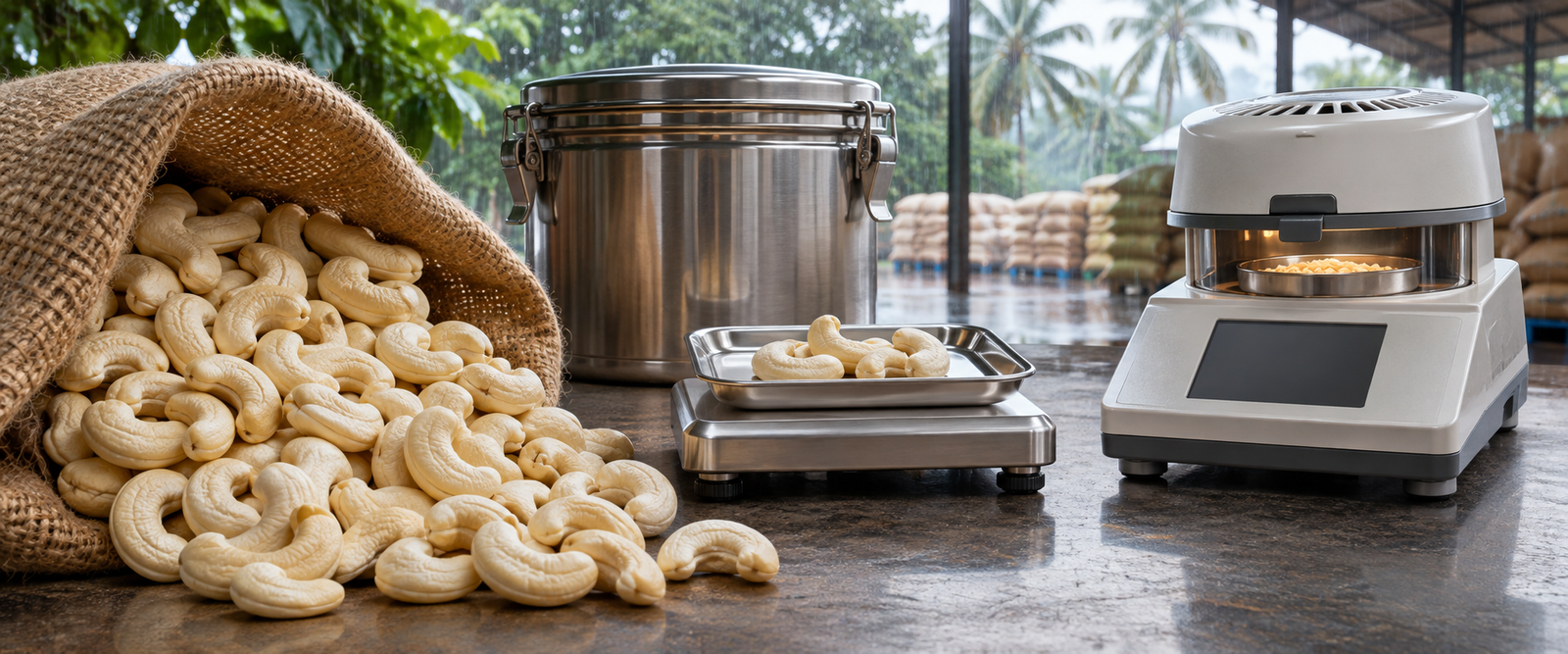
The safe cashew moisture level is 5% or less. FSSAI sets 5% as the top limit for cashew kernels sold in India. Above 5%, wet kaju costs you money in three ways.
