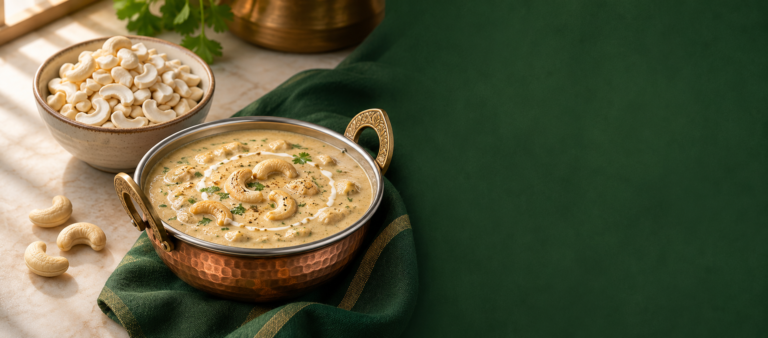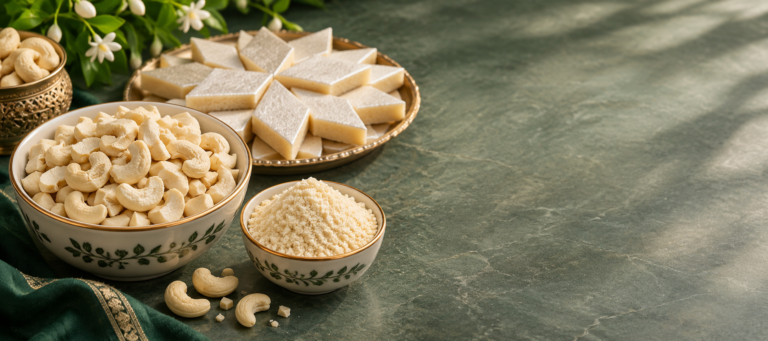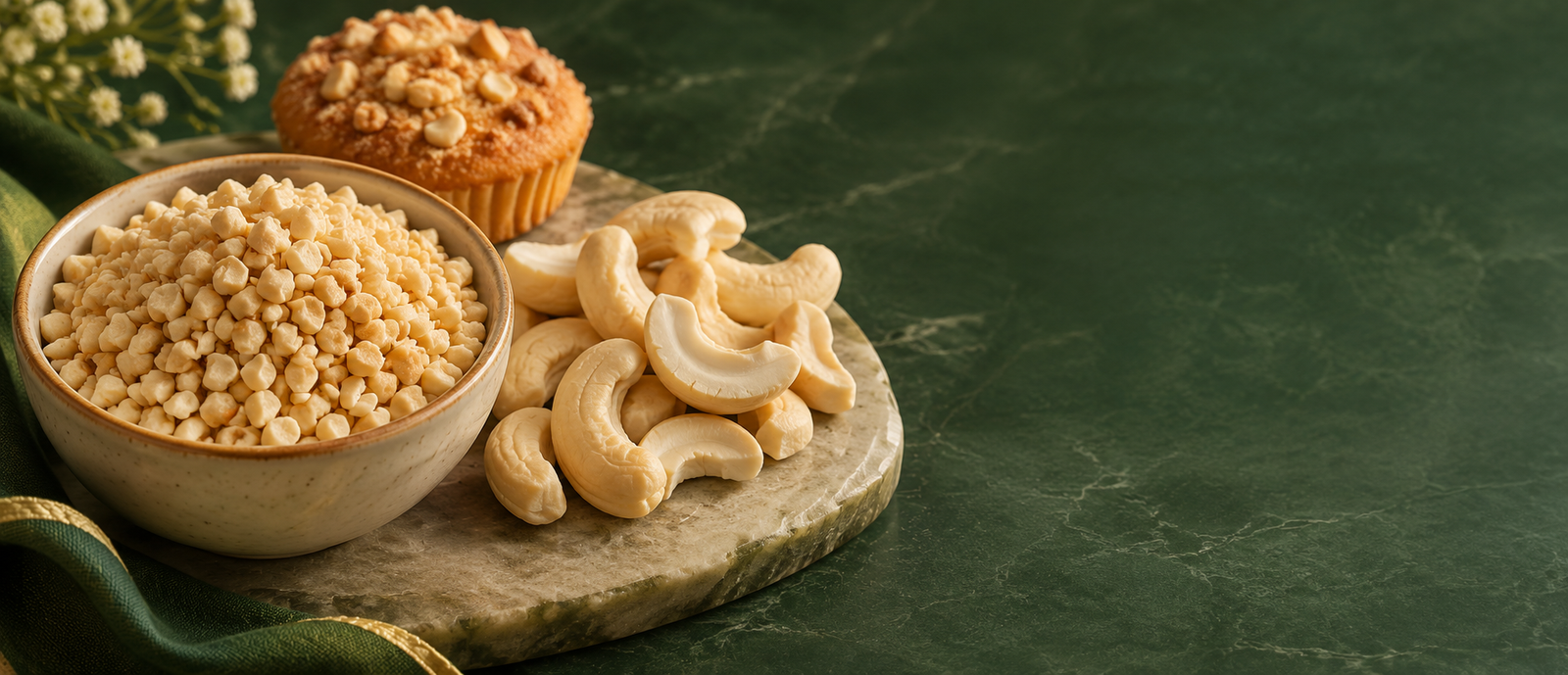
Baby Bits (BB) are tiny broken pieces of cashew kernels. Food makers use them in bakery fillings, small dessert toppings, cereal mixes and recipes that need ground cashew. Delhi traders may also call fine broken kaju kaju kani. Yet the name kani can cover different cuts. Ask for the BB grade, actual piece size and a sample before placing a bulk order.
First ask whether anyone will see the cashew pieces in the finished food. For a smooth kaju paste, tiny bits may work well. For a sweet sold with large kaju chunks, choose a bigger cut.
Is kaju kani the same as Baby Bits?
Kaju kani can refer to Baby Bits, but the 2 names are no guarantee of the same size. BB has a defined place in cashew grading. Kani is a market name for fine broken kaju. For the size distinction, compare kaju kani, SWP and BB. Some sellers use kani for BB. Others use it for finer cuts, including small scorched pieces.
A Delhi mithai shop may receive 2 quotes. One names BB white pieces. The other lists only kaju kani. Both may look fine in a photograph. Yet one batch could contain more loose powder or darker pieces.
Ask for the exact grade and colour. If the seller uses only the name kani, ask for a piece-size description and a sample from the proposed batch. Agree on the size in writing before comparing prices.
How small are BB cashews?
BB is smaller than Small White Pieces (SWP) and Large White Pieces (LWP). Under the AFI cashew size specification, BB pieces pass through a mesh with 2.36 mm openings. The 1.70 mm screen must hold at least 95% of the batch weight. A mesh is a metal screen with tiny holes for sorting cashew pieces.
Indian cashew grading references also describe BB as smaller than SWP, with pieces held on a 1.70 mm screen. SWP has a 2.80 mm lower size limit. LWP uses a 4.75 mm limit. The figures define grading screens. Individual pieces have uneven shapes and lengths. Ask which grading rule the supplier uses.
BB is also different from cashew powder. You can still see small grains of cashew in BB. Powder has much finer particles. A BB bag may contain some powder. Reject a powder-heavy bag unless the agreed sample matches it.
Where do Baby Bits work best?
BB can serve two jobs: fine grains you can see, or cashew you will grind. For visible grains, judge piece size and loose powder. For ground food, judge smoothness and the amount your kitchen can use.
Can a sweet shop use BB for kaju katli and barfi?
BB can work for kaju katli, barfi and other sweets when the kitchen grinds the cashew first. Check the finished sweet first. Raw pieces alone tell you little about grinding results.
For kaju katli, put the BB sample through the same grinder used for regular production. Check the ground cashew for coarse grains. Make a small batch using the same sugar, cashew weight and cooking method. Then compare the colour, bite and smoothness against your current grade.
If BB needs extra grinding or leaves grains in the sweet, a cheaper purchase price may bring no saving. For barfi with visible kaju chunks, BB cannot replace the larger pieces placed on top. The ground portion and the topping may need 2 different cuts.
A shop making sweets with light-coloured cashew should also request a matching colour sample. A piece-size code alone cannot confirm the batch colour.
Are Baby Bits suitable for bakery products?
BB works best in bakery foods where the recipe needs fine cashew grains. Biscuit dough, cake fillings, chocolate fillings and cereal bars can use small grains. The small grains spread through fillings without large chunks.
For a cookie with visible kaju pieces on top, BB may look too fine after baking. SWP or LWP can make the cashew easier to see. For a fine filling, grind BB until the grains reach your recipe size.
Compare bakery samples after baking. One piece size may look fine in raw dough and disappear from view in the finished biscuit. Also check for loose powder left in the mixing bowl. If your recipe needs visible grains, weigh the unused powder.
Can BB go into ice cream, kulfi and other toppings?
Yes. Baby Bits can work as a fine cashew topping for ice cream, kulfi and sweets. The small grains add cashew in many small spots. The Global Cashew Council forms reference also names ice cream toppings as a use for BB.
For kulfi with tiny cashew flecks, check BB after freezing and cutting. For ice cream with larger visible nuts, test SWP. For a topping dispenser, test the grains through its narrow opening.
Loose powder can settle at the bottom of a topping container. Compare the first and last portions from the trial container. If the later servings contain more dust than grains, choose a larger cut or agree on a lower powder limit.
Can restaurants use Baby Bits for cashew gravy?
Yes. BB can be ground for cashew gravy, curry paste or a smooth sauce. If every cashew piece goes into the grinder, whole-kernel shape adds little value to the dish. The kitchen still needs the right flavour and a smooth result.
Use the same weight of BB and your existing grade for a small gravy batch. Grind both with the normal amount of water. Check the paste before cooking, then taste the finished gravy. Compare grinding time, smoothness and the amount of paste you can use.
A recipe that adds cashew pieces after cooking needs a second cut. Use SWP or larger pieces for those visible additions. BB belongs in the ground portion unless the dish calls for tiny grains.
How much powder can a BB order contain?
Ask for a stated powder limit before placing the order. The Indian white-piece grading chart shows a 1% cashew-powder allowance for BB. That figure belongs to the chart specification. A Delhi quote marked only kani leaves the powder allowance unknown.
For a biscuit topping, powder may count as waste. For gravy paste, some fine cashew can still work. Decide the allowed powder amount after a recipe trial and writing it into the purchase terms.
Also check the colour. White BB and scorched fine pieces can look different once mixed into a light-coloured sweet. For pale sweets, request white BB. Reject pieces with mould, insects, shell waste or a stale, oily smell.
How should you check a BB sample before buying 10 kg or more?
Ask for a sample from the batch the seller plans to send. Test it in your food. A clean-looking sample from another batch cannot confirm the stock that will arrive.
- Look at 100 g on a white plate. Check grain size, colour, loose powder, shell pieces and any sign of insects.
- Check the smell before cooking. Reject any sample with a sour, musty or stale, oily smell. Never taste a sample showing mould or pests.
- Make one small production batch. Use the normal grinder, oven or topping method. Judge the finished sweet, biscuit or gravy.
- Weigh the part your kitchen rejects. Set aside the powder or pieces your recipe rejects. Note the usable weight and compare another sample using the same method.
- Save the sample details. Note the seller, grade, colour, batch reference and date. Ask for the same batch in your order.
A plate test helps the kitchen choose a suitable cut. It cannot prove the entire lot meets a formal sieve grade. For strict size limits, request the agreed sieve specification and proof from the supplier.
Is kaju kani cheaper than SWP or LWP?
A smaller cut can cost less, but price per kg alone cannot tell you the best deal. Compare the final cost of cashew your recipe can use. A cheap pack with heavy powder loss can cost more per finished batch.
Suppose 10 kg of one cut yields 9 kg your bakery accepts. Use 9 kg when dividing its full delivered price. If another cut yields the full 10 kg, divide that delivered price across 10 kg. Compare both results using the same recipe and powder rule.
For a Delhi order, include the actual delivery charge or pickup cost. Check the invoice for the grade, net cashew weight, price per kg and applicable GST. Compare 2 kaju kani offers after both sellers confirm the size and colour.
What should you confirm when the BB delivery arrives?
Match the delivered batch against the sample you approved before payment. Check the seal, batch or lot reference, invoice, net weight and colour before production. Open a suitable amount and compare the grain size with the saved sample.
If the pieces look different, take photographs before mixing them into food. Save the pack label, quote, invoice and messages. Contact the seller with the exact difference. Set aside the affected cashew. Follow the return or replacement terms until the seller resolves the issue.
A repeat order needs the same attention. A previous BB sample cannot confirm the next batch, even when both invoices have the same grade name.
What should you confirm for a BB or kaju kani order in Delhi?
Choose BB for fine grains or grinding, and choose SWP or LWP for visible pieces. Ask for the correct colour and powder limit. Try the proposed batch in your own recipe before buying a large amount.
When contacting NutDana, tell us what you make, the piece size you need, your order weight and the Delhi delivery area. Ask for the available BB or kaju kani grade and the complete quote. You can start from our Delhi cashew wholesale page. Confirm product availability and order terms before payment.