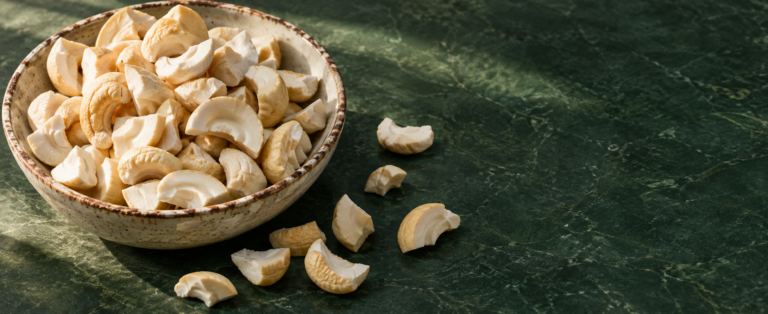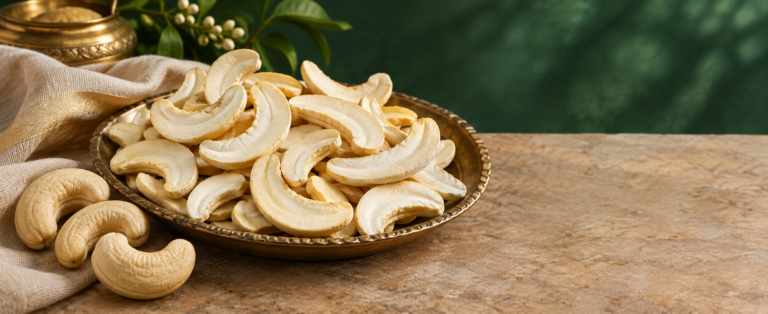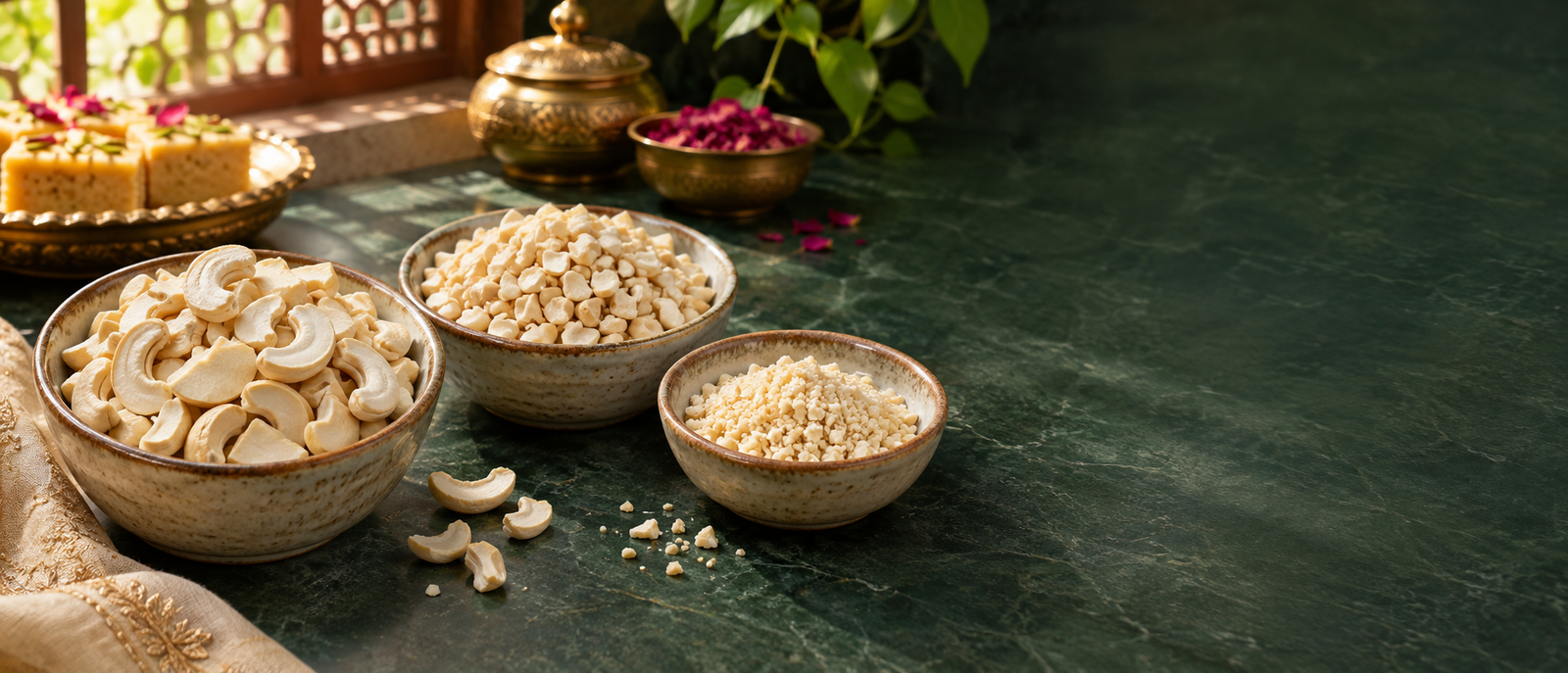
No. Kaju kani is a market name for small broken cashews. SWP and Baby Bits are separate grades. One seller may call SWP kani. Another may use kani for Baby Bits, also called BB. Some sellers use the same name for other small pieces. The word kani alone cannot confirm what will arrive.
Start with what you will make with the kaju. A Delhi mithai shop grinding cashews needs a different piece size from a bakery adding cashew pieces on top. Check the grade, colour, amount of powder and total cost before buying in bulk.
A seller offered me kaju kani. What exactly should I ask for?
Ask for the grade written on the bag and invoice. A quote marked kaju kani still needs a size description. Confirm SWP, BB, SSP or a mixed lot.
For a mithai topping, bigger pieces remain visible. Tiny bits may disappear into the sweet. Two packs called kani can behave differently in the same recipe.
We recommend asking for a photograph with a ruler beside the pieces. A sample from the proposed batch is better. Also ask if the pieces are white or scorched. Agree on the grade before comparing the price per kg.
How much smaller are Baby Bits than SWP?
Baby Bits are smaller than SWP. Indian grade references separate the pieces according to which sieve holds them. A sieve is a tray with small holes. The opening size helps sort big pieces from small ones.
- LWP, Large White Pieces: Larger broken cashews held on a 4.75 mm sieve.
- SWP, Small White Pieces: Smaller white cashew pieces held on a 2.80 mm sieve.
- BB, Baby Bits: Very small white pieces held on a 1.70 mm sieve.
The numbers refer to the sieve holes. Cashew bits have different lengths and shapes. A grade covers a range of pieces, subject to its size rules. The All India Cashew Association grade reference sets out these separate groups.
A seller might call SWP eight-piece kaju. Such piece-count wording cannot replace an SWP grade on the order. Ask for the grade code and actual piece mix.
Is Baby Bits the same as cashew powder?
No. Baby Bits are tiny cashew pieces. Cashew powder is finer. You may be able to see individual BB pieces in a sample. Loose dust can collect at the bottom of a pack, even when the main pieces look fine.
The All India Cashew Association grade chart lists 1% cashew powder as the stated maximum for BB. That figure belongs to the chart specification. Ask which specification your seller uses before treating the number as an agreed order limit.
For a Delhi sweet shop making cashew paste, some fine material may still be usable. For biscuits with visible pieces, loose powder may be waste. We recommend agreeing on the amount of powder you will accept for your recipe. A vague promise of fine kani cannot replace that agreement.
Can fine kaju kani be SSP too?
Yes. SSP is Scorched Small Pieces in Indian cashew grade references. Some trade listings call it fine kani. SWP and BB belong to the white-piece group. SSP belongs to the scorched-piece group.
Scorched cashews can have a cream, ivory or light brown shade from heat during processing. A darker shade alone cannot tell you if the cashews are spoiled. Check the smell, cleanliness and actual shade. Reject cashews with mould, insects or a rancid smell.
For white kaju katli or a light-coloured topping, ask for white pieces and a matching sample. If a seller quotes SSP, request its actual colour before agreeing. The word fine describes size loosely; it cannot promise white pieces.
Which piece grade suits your recipe?
Start with the finished food. The shape of a broken cashew counts most when customers will see or bite it.
For kaju katli, kaju paste and gravies
Baby Bits can be a sensible option when you grind all the cashews. Larger pieces lose their shape during grinding anyway. Ask for a BB sample, check its colour and smell, then use the amount your kitchen puts into one batch.
If your recipe uses all the fine material, a smaller size can work. Yet a bag with heavy powder content deserves a separate quote. Powder and BB have different size descriptions. Also check the taste of a fresh sample before committing to several bags. A low price cannot rescue stale or rancid cashews.
For mithai toppings, biscuits and bakery garnish
Start with SWP when each cashew piece must remain visible. Baby Bits are useful for a much finer sprinkle. LWP may suit a product needing bigger cashew pieces.
Place a few sample pieces on the sweet or biscuit you sell. Check the size after your normal work. If BB disappears into the finished item, ask for SWP. If SWP looks too large, a finer grade may be better. Your finished food should decide the size. A premium label cannot settle the choice.
How should you check a small sample before a bulk order?
Ask for a sample from the batch proposed for your order. Request the batch or lot number if available. A sample from a display jar tells you little about the bags arriving later. For a large purchase, ask how the seller selected the sample.
For a quick kitchen check, spread 100 g of the sample on a clean plate. Make three small groups:
- Pieces suitable for your finished food.
- Smaller pieces your recipe can still use.
- Loose powder and crumbs your recipe cannot use.
Weigh each group. Suppose the third group weighs 8 g. That sample has 8% unusable crumbs for your recipe. The result shows what your recipe can use. It cannot confirm an official SWP or BB grade. Formal grading needs specified sieves and a sample representing the full lot.
Look for insects, mould, dirt, loose cashew skin and a rancid smell. Good piece size cannot make damaged cashews acceptable. Ask the seller about packing, net weight and the condition of the seals. Photographs of your sample help when you discuss a repeat order.
Before payment, agree on the grade and the accepted amount of powder in writing.
Can cheaper kani cost more per usable kg?
Yes. The useful price depends on how much of the pack your kitchen can use. Compare the final delivered cost with the weight suitable for your recipe.
Consider a sample calculation, with figures chosen only to show the method. A ₹600-per-kg quote has 10% crumbs your topping cannot use. You pay about ₹667 for each usable kg. Another quote costs ₹640 per kg, with only 2% unusable crumbs. Its usable cost is about ₹653 per kg. The second bag has a higher printed rate and a lower usable cost.
For a paste where your kitchen uses every fine piece, the cheaper ₹600 grade may win. The choice changes with the recipe. Add GST, packing charges and Delhi delivery or pickup costs before deciding. The rates are examples, not current quotations.
What should your Delhi kaju quote include?
We recommend asking the seller to write down the details that decide what you receive:
- Exact grade: SWP, BB, SSP or an agreed mixed-piece description.
- Colour and piece size: White or scorched, with a sample reference.
- Powder allowance: The amount accepted for your intended use.
- Quantity and packing: Net weight in kg, pack type and any batch details.
- Total price: Rate per kg, GST and Delhi delivery or pickup charges.
- Delivery and complaint terms: Expected arrival and steps if the goods differ.
For a mixed kani offer, ask which sizes make up the mix. A mix may work for grinding, yet spoil a topping that needs visible pieces. Request the size mix in writing.
You can send a short request: Please quote 20 kg of white kaju pieces for mithai topping. Is the grade SWP or BB? Please share the batch sample, powder allowance, net weight, GST and delivery total for my Delhi PIN code. Change the quantity and food use to match your order.
What if the delivered kani differs from the sample?
Compare the delivery with the approved grade and sample. The name kani alone cannot settle a complaint. Check the pack label, net weight, seal and batch number where supplied. Photograph the unopened pack before separating a fresh sample.
If the pieces are much smaller, weigh a new 100 g sample using the same groups. Place the earlier and new results next to each other. Send the seller the invoice, sample photographs, batch details and the exact difference. Ask about the agreed complaint process before opening more packs.
For repeat orders, mention the previous grade and sample reference. If a fresh lot replaces the earlier one, request a matching sample. Your recipe needs the same usable piece size each time, even when the seller keeps the same market name.
What should I send with my enquiry?
Tell us what your business makes, the quantity in kg and the piece size you need. Ask for an exact grade description, available sample details and the full Delhi delivery cost before confirming an order.
Visit our cashew wholesale page for Delhi to enquire about SWP cashew pieces, Baby Bits or other kaju grades suited to your use.