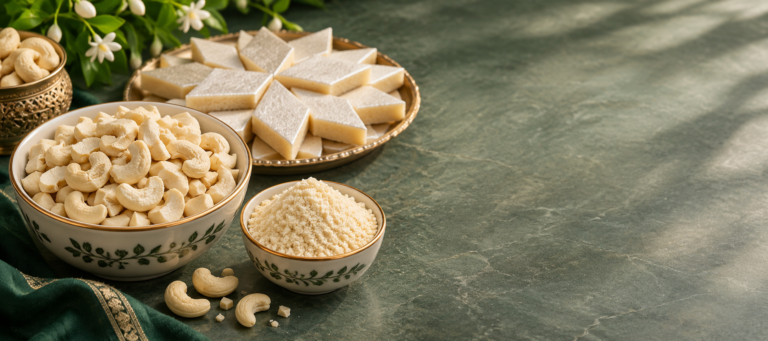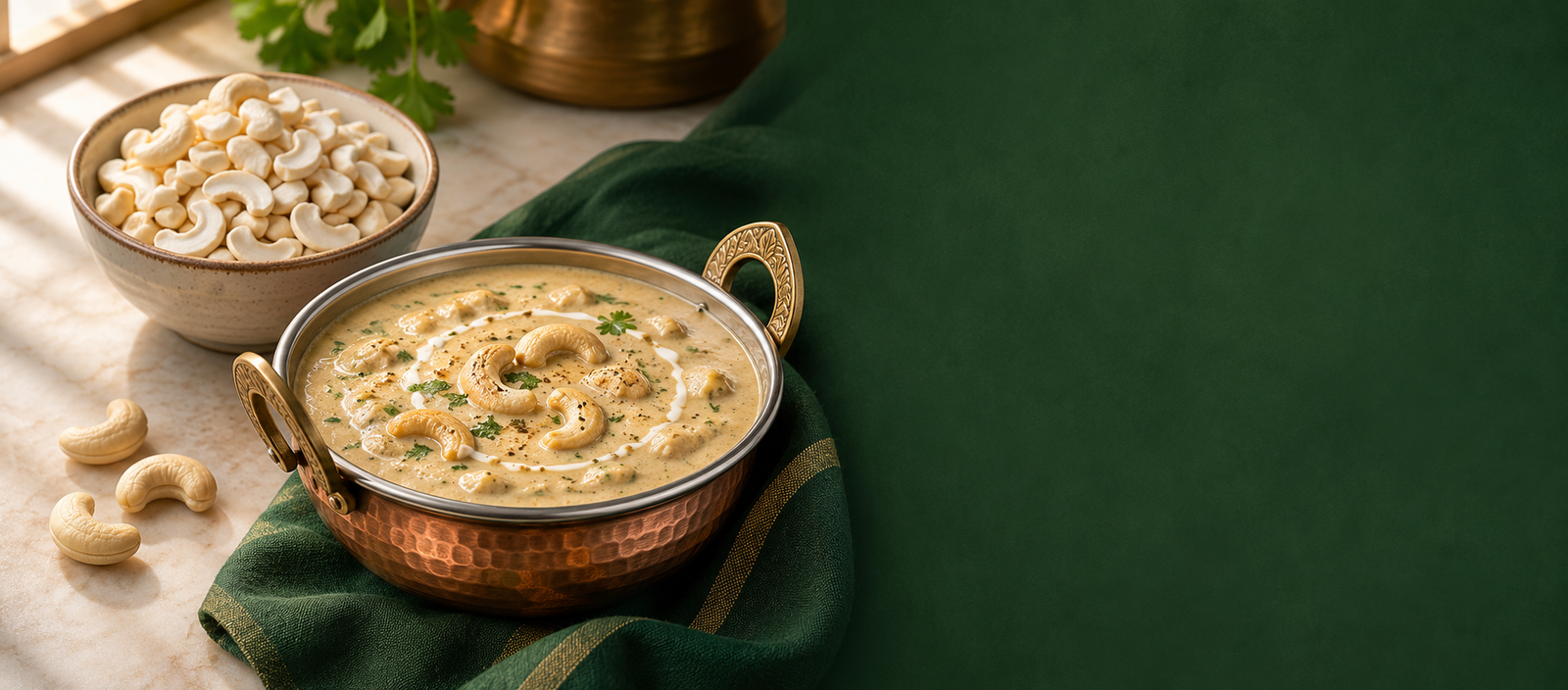
Start with a sample of SWP (Small White Pieces) for smooth restaurant gravies. Compare BB (Baby Bits) when every piece goes into cashew paste. Choose LWP (Large White Pieces) when your kitchen needs larger kaju pieces for serving or garnish.
For a Delhi kitchen, the best broken cashew grade for gravy depends on your recipe. Cook equal weights from two samples. Select the one that tastes right, works in your recipe, and costs less per finished pot.
Which broken kaju grade works for each restaurant dish?
For a smooth restaurant gravy such as shahi paneer or white korma, start with SWP. Your cook grinds the pieces into paste, leaving no whole kaju on the plate. SWP also has a white or pale ivory colour, which suits a light gravy.
For makhani and other fully ground gravies, compare BB with SWP. Baby Bits are smaller pieces. If both samples make the same acceptable sauce, the lower delivered cost can decide your purchase.
For pulao, biryani, or visible kaju garnish, consider LWP. Its pieces are larger than SWP. Ask for splits if the dish needs neat cashew halves. Two-piece kaju and splits need a separate size check. Whole W320 kaju is more useful when the recipe needs whole kernels.
Published cashew grading charts distinguish LWP, SWP, and BB according to piece size. A grade name confirms a size category, never the finished gravy result.
Should a gravy-only kitchen choose BB over SWP?
Choose BB when its approved batch makes an equally good gravy at a lower delivered cost. Smaller pieces alone cannot promise a better paste.
Ask for BB from the actual batch on offer. Spread a small amount on a white plate. Check how much loose powder and how many dark specks appear. Baby Bits and cashew powder are different trade materials. A bag full of powder needs its own product description, sample, and price. See how BB differs from SWP and loose kaju kani.
For tomato-based gravy, a cook may accept a slight colour difference that would show in white korma. Test the cooked dish before approving either grade. Avoid buying darker pieces only because the gravy contains tomato.
Is LWP a better choice when catering needs gravy and garnish?
LWP works when one cashew order must supply visible pieces too. Shahi paneer needs paste. Vegetable pulao may need large pieces. LWP can serve both jobs if its sample meets the kitchen requirement.
For a large event, compare that option with buying two grades. Use SWP or approved BB for the gravy and a larger grade for the pulao. A two-grade order may cost less if only garnish needs larger pieces. Compare actual quotes before choosing. More packing or delivery charges can change the result.
Avoid paying for W320 whole cashews only to grind every kernel. Whole-kernel size serves a different purpose. It cannot prove a richer or better-tasting sauce.
Are SWP, SSP, and kaju tukda the same grade?
No. Ask for the exact grade name. The word kaju tukda can cover many piece sizes in a wholesale conversation. Put SWP, BB, or LWP on the quote and request a sample.
SWP refers to Small White Pieces. SSP refers to Scorched Small Pieces, which can have a darker colour. Both may break into small pieces, yet the colour grade differs. For a pale white gravy, start with white pieces. If a seller offers SSP, cook a separate sample before comparing prices.
If a quote uses 2-piece, 4-piece, or 8-piece, request a sample. Those seller labels describe pieces, while official grades use size and shape. Check the grade shown on the pack and invoice.
How should your chef compare two broken cashew samples?
Use the same recipe and change only the cashew sample. Differences in water or cooking time can spoil the comparison.
First, inspect the dry samples
Request a sample from each batch on your quote. Check their colour, smell, piece sizes, and loose dust. The samples should have no mould, insects, foreign material, or stale smell. Ask which grade and batch each packet represents. Without batch details, the kitchen cannot match samples to deliveries.
Next, cook two equal gravy portions
If your recipe uses 200 g of dry kaju per pot, weigh 200 g from each sample. Use the same soaking time if your kitchen soaks cashews. Add the same water, use the same mixer, and grind for the same time. Cook both pastes with equal onions, tomatoes, spices, and dairy.
Taste both gravies at the serving stage. Look for grainy bits and unwanted dark specks. Compare thickness without adding extra water to only one pot. If staff reheat gravy before the event, check both portions after reheating. Follow the same food safety steps for each pot.
Approve the gravy before comparing the rate
Reject a sample if the sauce has an unwanted taste, visible grit, or poor colour for the dish. Extra straining or another round of grinding costs time and money. Ask the chef to approve the batch first. Only then compare the full delivered price.
Why can two SWP bags produce different gravy results?
Two batches can differ even when both have the SWP grade. SWP identifies piece size. Freshness, storage, and handling can differ. A new batch may look or taste different from your earlier sample.
Save the approved sample details with the order. When the seller changes the batch, request another sample before replacing the approved one. For repeat orders, note the dry kaju weight, cooking steps, and approved batch.
A dry look alone cannot prove safe moisture levels. The FSSAI cashew kernel standard allows at most 5% moisture, or water content. It also requires freedom from mould, insects, and bad smell or taste. Smelling cashews cannot measure water content. Request test evidence from the seller when needed.
How much does broken kaju cost per pot of gravy?
Compare the delivered cashew cost for one accepted pot, along with the rate per kilogram. Include any tax and delivery charges that apply to your quote. Then use the dry kaju weight from your recipe.
Suppose the recipe needs 200 g dry kaju per pot. At a delivered SWP rate of ₹750 per kg, the cashew cost is ₹150. At a delivered BB rate of ₹680 per kg, it is ₹136. The ₹14 difference per pot reaches ₹700 for 50 pots. Both rates are examples, separate from NutDana prices.
Pick the lower delivered rate only after both samples pass the gravy test. If a batch needs extra grinding, straining, or kaju, count those costs too.
How much kaju tukda should a caterer order for an event?
Start with the dry cashew weight in your approved recipe and the number of pots planned. Multiply the two numbers to find the required quantity. Add any known kitchen allowance for planned extra portions, then check the pack sizes on offer.
For 60 pots using 150 g each, the kitchen needs 9 kg of dry kaju. Any extra quantity should follow the actual event menu and kitchen plan. Buying extra without a use can leave opened material after the event.
For a menu with both gravy and garnish, calculate each grade separately. A combined quantity hides the weight needed for each grade. Request a written quote for each grade and net weight.
What should a Delhi restaurant ask before ordering broken kaju?
Ask for a batch-specific quote that matches the sample your chef approved. Share the dish, grade, needed weight, Delhi delivery address, and required arrival date.
Confirm these points before paying:
- Exact grade: SWP, BB, LWP, or another named grade
- Sample and batch details for the material offered
- Price per kg, GST, delivery charge, and total amount
- Net cashew weight, excluding the bucket or outer pack
- Pack size, delivery date, and a contact for order issues
- A fresh sample if the approved batch sells out
Compare quotes for the same net weight and delivery address. A lower base price can lose its advantage after transport charges. For wedding catering, leave enough time for receiving and checking the delivery before cooking begins.
What should the kitchen check when the cashew delivery arrives?
Match the delivered grade, batch, net weight, and pack condition against the order. Check seals before opening. Use a clean utensil to inspect a sample from the delivered material. Contact the seller promptly if the grade, weight, or batch differs from the written order.
Reject cashews with mould, insects, foreign matter, or an unusual stale smell. Protect opened pieces from water, heat, and kitchen steam. Close food-grade packs between uses. Tell serving staff which dishes contain cashews because tree nuts can cause allergies.
For a NutDana quote, share your gravy recipe and dry kaju weight per pot. Add your total quantity and Delhi delivery address. Request the grades currently available, sample and batch details, and full delivery terms. Visit our wholesale cashew nuts in Delhi page for the next step.