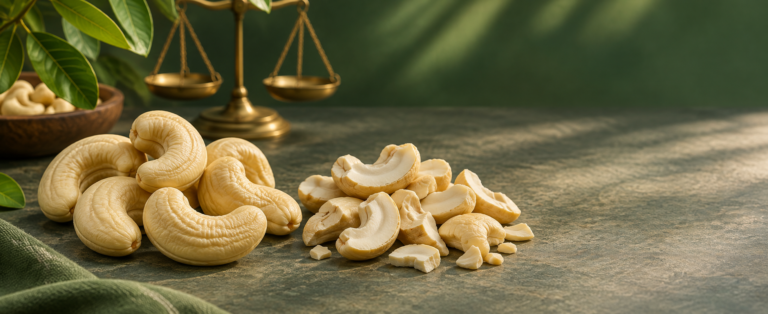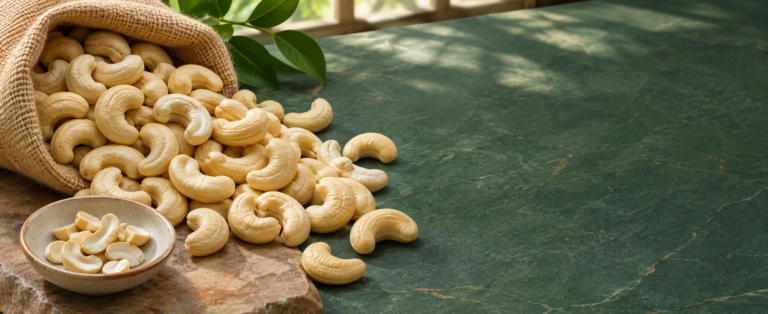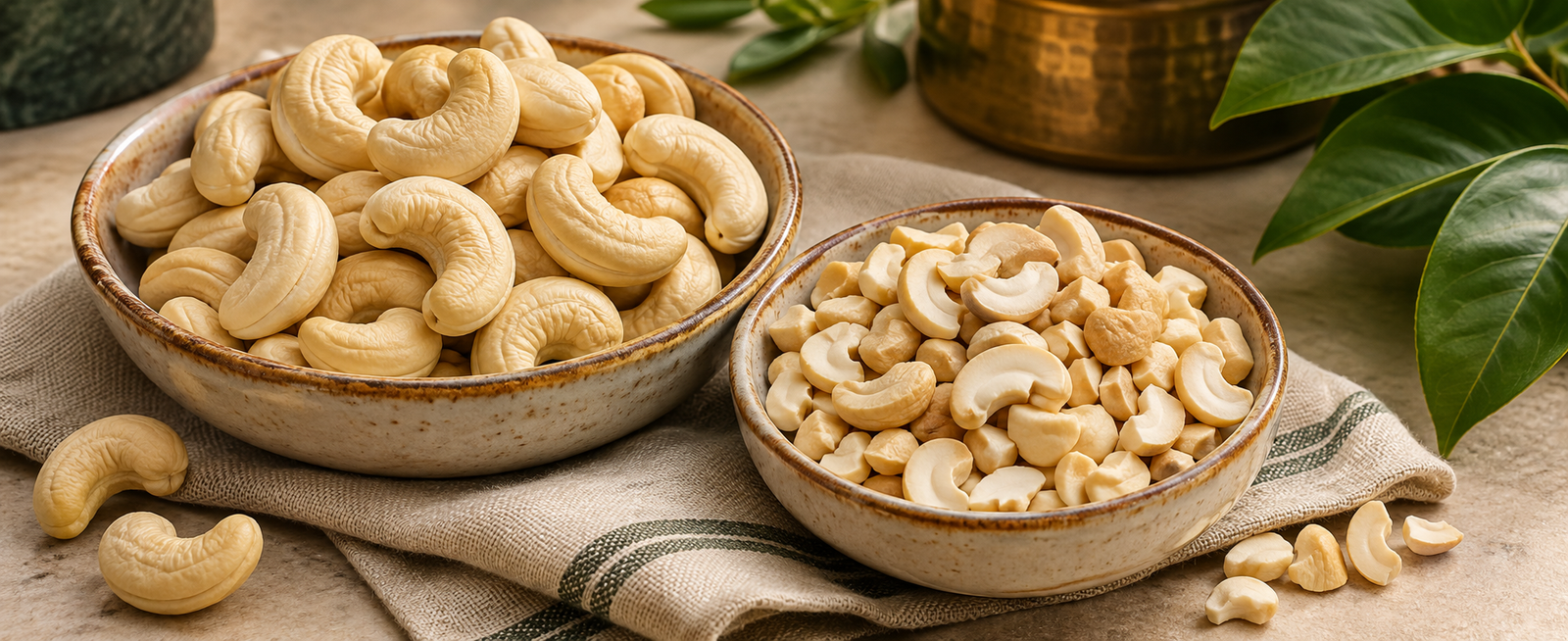
No. Broken cashews can be good-quality kaju. A broken kernel has lost its full shape. Poor-quality kaju has another problem, such as a stale smell, mould, insects, or dirt. A whole cashew can have those problems too.
Start with how you plan to use the kaju. A Delhi sweet shop making kaju katli may buy clean pieces for grinding. A shop placing a whole cashew on each sweet needs the right whole grade. Check the batch and how you will use it.
Does a broken cashew have a lower grade?
For shape, yes. For food quality, the broken edge settles nothing. The Bureau of Indian Standards cashew manual places whole kernels above pieces in its shape grades. The Indian food safety standard from FSSAI covers both forms and requires clean, dry cashews free from mould, insects, and rancid smell or taste.
A whole W320 cashew has value when its full shape appears in your food or retail pack. A clean broken piece can work well when you plan to grind the kaju. Breaking the nut alone cannot prove lower food value or poorer taste. Yet a cheap bag of mixed, stale pieces remains a poor purchase. A shape grade never replaces a check of the actual batch.
What does kaju tukda mean on a Delhi quote?
Kaju tukda can refer to several sizes of broken cashew. Cashews may break while workers remove the hard shell and thin skin. Some break later during handling. Sellers sort the pieces into separate grades. A broken edge tells you little about the age or smell of the batch.
When a seller offers kaju tukda, ask for the exact cut. The AFI cashew trade specification describes these piece grades:
- Splits (S): A kernel split along its length, much like 2 halves.
- Butts (B): A kernel broken across its width.
- LWP: Large White Pieces, bigger pieces from broken kernels.
- SWP: Small White Pieces, smaller than LWP.
- BB: Baby Bits, smaller than SWP.
Indian grading rules use screens with different hole sizes. LWP remains on a screen with 4.75 mm holes. Smaller SWP remains on a screen with 2.8 mm holes. The names refer to piece size, with no promise of exactly 4 or 8 equal cuts. Delhi traders may also use labels such as 2-piece, 4-piece, 8-piece, or JH. Ask for the piece size and the named grade before comparing their rates. Two bags marked tukda can contain very different cuts.
Can a W320 bag contain a few broken cashews?
Yes. A whole-grade name alone cannot promise zero broken pieces. The AFI trade specification allows up to 10% broken kernels or pieces by weight in whole-kernel shipments under its own terms. Ask each seller which grade rules and broken-piece limit apply to the quote.
W320 identifies a size grade for whole kernels. It cannot prove that every piece in the bag is whole, fresh, or equal in size. A buyer packing whole kaju for resale should agree on the broken share before payment.
Should a sweet shop buy whole kaju or kaju tukda?
Choose whole cashews when people will see the full nut. Choose clean pieces when the recipe will crush or grind them. Paying extra for a full shape has little value after grinding. Yet the cheapest piece grade can also create more waste.
Kaju katli and cashew paste
For kaju katli, the maker grinds kaju into powder or paste. LWP or SWP may suit the recipe if the batch has clean, even pieces. Check the colour your finished sweet needs. Large pieces add little value once your grinder makes fine powder.
Ask how much fine dust comes with the pieces. A small amount of clean cashew powder may work in some recipes. For other recipes, extra powder may affect the mix. Decide how much powder your recipe can use before choosing a grade. A lower rate has little value if much of the bag gets removed.
Barfi toppings, bakery use, and retail packs
For a barfi topping, whole kernels or neat splits make more sense. Customers see each piece, and the cut affects the look. Small SWP pieces cannot replace a full cashew on top of a sweet.
For biscuits or cake fillings, ask for pieces near the size your recipe needs. Very fine crumbs may disappear into the mix when you want a visible crunch. For retail packs that promise whole kaju, buy the agreed whole grade and confirm the allowed broken share. For kaju-piece packs, name the piece grade on the order.
What makes a broken cashew batch poor quality?
Mould, insects, a stale or bitter smell, dirt, and shell fragments deserve attention in any grade. Whole and broken kaju face the same basic food safety concerns. Never use suspect pieces merely because your recipe includes grinding or heat.
Colour needs a more careful look. White pieces should match the shade agreed for their grade. Some cashews become darker from heat during processing. Sellers call them scorched grades. A darker shade alone cannot prove spoilage. Mixed shades, spots, and damaged pieces still deserve a closer check against the grade and sample.
The FSSAI cashew standard lists 5% as the maximum moisture content. You cannot prove that percentage from a photograph, a bite, or a hand check. For a large order, ask the seller for moisture test details.
A second issue is the wrong cut. A clean SWP delivery against an LWP order can fail your recipe even when the pieces have no food safety fault. Treat food condition and grade mismatch as separate reasons to raise a concern with the seller.
How can I check a sample before ordering broken kaju in Delhi?
Ask for a sample linked to the batch you would receive. Ask the seller for the grade name, batch number, and packing details. The batch number should link the sample to the packs you will receive. A loose handful with no batch reference tells you little about the later delivery.
Spread the sample on a clean plate. Check the mix of large and small pieces, fine powder, skin, odd colours, and visible dirt. Smell the kaju. Stop the purchase discussion if you find mould, insects, or a strong stale smell.
You can also check how much of the sample suits your recipe. Suppose you sort a 100 g sample and find 8 g of crumbs too fine for your use. You have 92 g left for that purpose. That small check helps compare quotes. It cannot promise the same result for every bag, and it cannot prove food safety.
Before you approve the order, ask the seller to confirm the grade, lot, net weight, and acceptable mix of piece sizes in writing. Ask for another sample if the seller changes the lot. When the goods arrive, compare several packs with the agreed sample and order details. A sample photo alone cannot confirm the smell or the batch source.
Could cheaper broken kaju cost more per usable kg?
Yes. Compare the price of the kaju you can actually use. A low quote can lose its saving after removing unwanted crumbs, damaged pieces, or the wrong cut.
For example, suppose 10 kg of broken kaju costs ₹7,000. After sorting, you can use 9 kg for your recipe. Your usable cost becomes ₹7,000 ÷ 9 = about ₹778 per kg. The ₹700 price on the quote tells only part of the story. The ₹700 rate is an example figure for the calculation.
Use the same method for another supplier or piece grade. Add delivery charges and any taxes that apply to the order before dividing the total cost. Compare similar grades and the same recipe use. A 100 g sample can help with an estimate, yet the full delivery may differ.
Do broken cashews lose freshness sooner?
A broken edge alone cannot tell you how fresh the kaju is. More cut surfaces can expose more of the nut oil to air. Packing, heat, storage, and the age of the lot also affect quality. Whole kaju can develop a stale smell too.
For either form, ask for packing details and inspect the seal at delivery. Store sealed packs in a cool, dry place according to the pack instructions. After opening, protect the remaining kaju from air and moisture. Reject any lot with signs of mould or rancid smell, whatever its grade.
Which grade should I ask for?
Choose whole W320 or another suitable whole grade for visible use. For grinding, compare named piece grades such as LWP and SWP. For topping with halves, ask about splits. No single grade wins for every shop.
Tell us your product, preferred piece size, required weight, and Delhi delivery area. Ask for the grade, sample terms, packing details, and a full quote. For cashew wholesale in Delhi, start with the kaju your recipe can use, then compare the cost per usable kg.