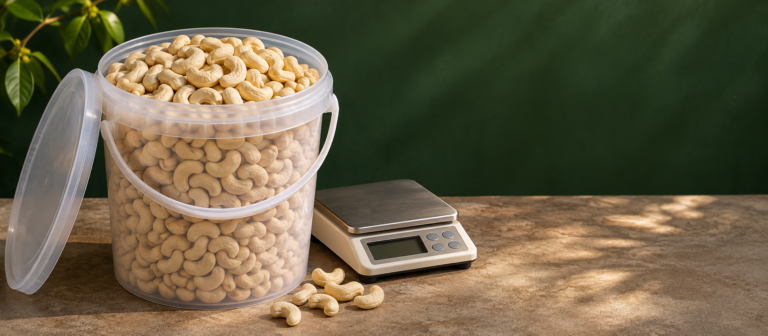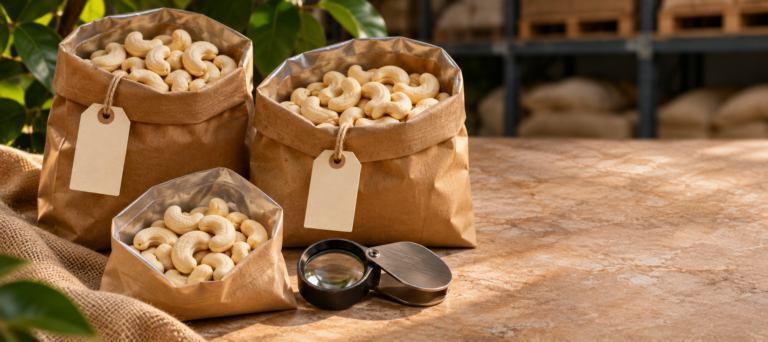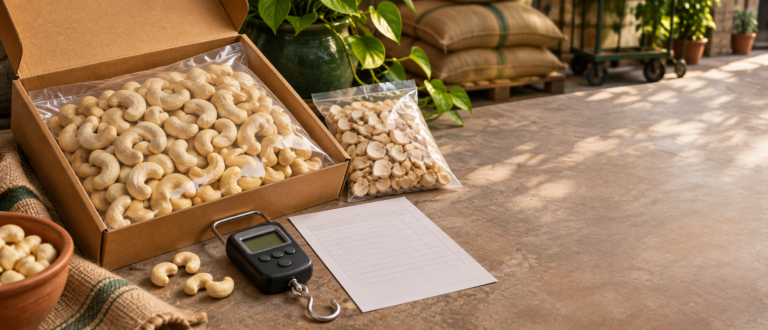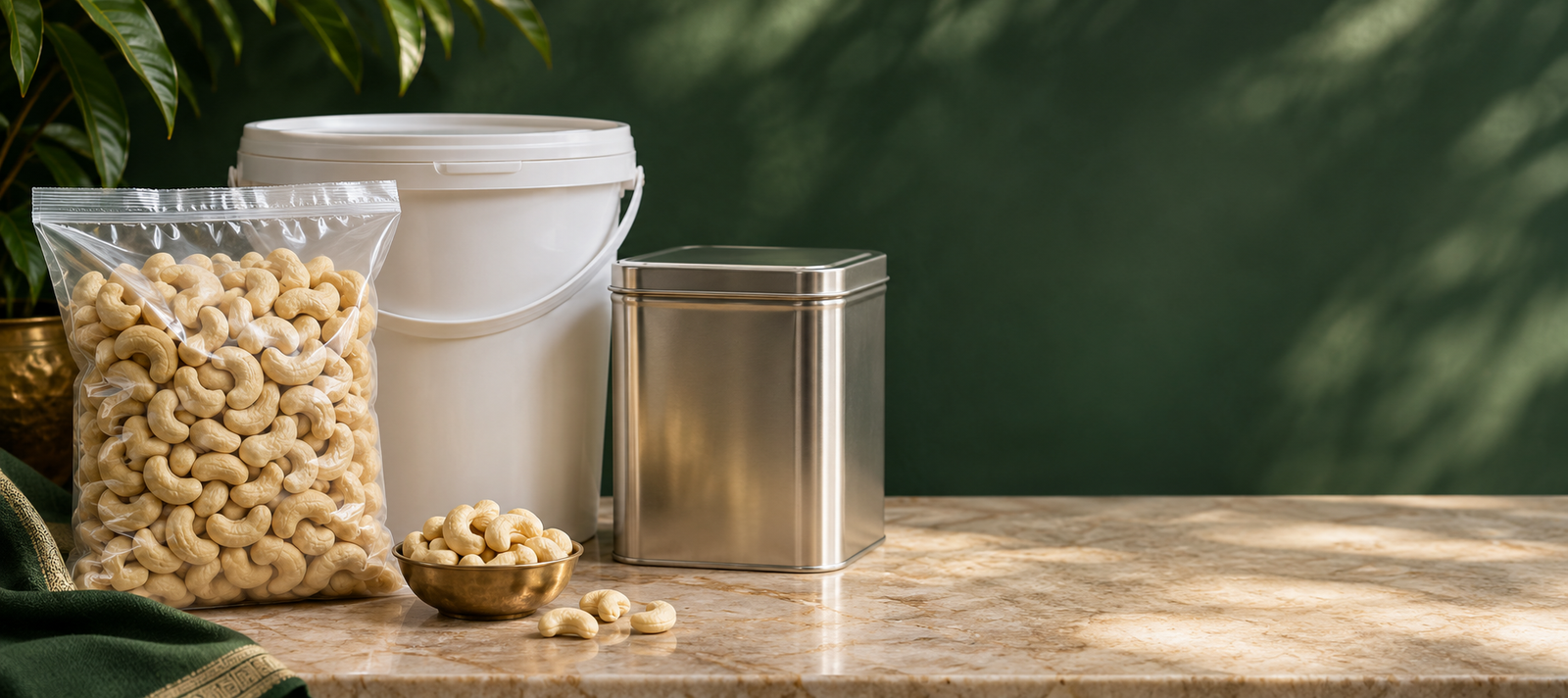
In India, 10 kg tins, 10 kg buckets and sealed pouches are wholesale kaju packing options. Export cashew kernels also come in 25 lb (11.34 kg) tins or sealed pouches. A carton may hold two inner packs. No single pack size covers every wholesale order.
Start by checking the net kaju weight, the seal and the grade inside each pack. A blue bucket identifies the container. Its colour cannot confirm W320 grade, food-safe packing or the weight of kaju inside. Check the net weight of a 10 kg bucket separately.
Is 10 kg the standard wholesale kaju pack size?
10 kg is one common trade size, while 11.34 kg is a documented export size. A bulk quote should name the net weight of every tin, bucket or pouch. Count the sealed packs inside a carton before comparing two quotes.
For example, two 10 kg tins contain 20 kg net kaju. Two 11.34 kg tins contain 22.68 kg net kaju. Both shipments may arrive as one carton. The number of cartons tells you less than the number and weight of the packs inside.
If a seller quotes one carton of W320, ask for a line such as 2 tins × 10 kg net = 20 kg W320. That line makes the quantity easy to check at delivery. A different pack size can change your total kilos even when the grade remains W320.
Which is better for bulk kaju: bucket, tin or sealed pouch?
Judge each pack on its seal and protection first. Cashew kernels need protection from air and moisture. Whole cashews also need protection from crushing during handling. The outer container and inner seal can serve different purposes.
When should I choose a 10 kg kaju bucket?
A rigid food-grade bucket is useful for bulk handling and storage. A Delhi retailer buying W320 may prefer a firm container around whole kernels. A bucket can reduce contact with other parcels during transport, although breakage remains possible.
Ask what touches the kaju inside. Some buckets can hold food directly. Other packs may have an inner food-grade pouch. Also ask how the lid is sealed. A closed bucket alone cannot prove vacuum or nitrogen packing.
When is a metal cashew tin useful?
A metal tin offers firm sides and a sealed closure. Cashew processors can pack tins after removing air and adding nitrogen or carbon dioxide. Trade sources document 10 kg and 11.34 kg tins for different orders.
Ask for the tin weight, sealing method and number of tins per carton. A 10 kg tin and an 11.34 kg tin contain different quantities. Match each tin weight against the invoice. Indian FSSAI packaging rules also prohibit reusing a previously used tin for food packing. Ask for a new food-safe tin if a supplier offers tin packing.
What does a vacuum or nitrogen pouch protect?
A vacuum pack has much of its air removed. A gas-filled pack replaces some air with a protective gas, such as nitrogen. Both methods aim to limit oxygen contact while the seal remains intact. The pouch material also needs to limit moisture entry.
A full-looking pouch cannot prove nitrogen packing. A tight-looking pouch cannot prove the seal is sound. Ask the seller to name the method on the order. For whole W320 or W240, request outer protection against knocks. A pouch alone cannot promise zero broken cashews.
Does a 10 kg kaju bucket need an inner plastic pouch?
An inner pouch is optional when the bucket itself meets food-contact rules. A suitable food-grade bucket can hold kaju directly. Another pack may use a sealed food-grade pouch inside a bucket. The correct choice depends on the material touching the cashews and the closure used.
A plain cardboard carton has a different job. It holds sealed units together during shipping. Loose kaju should have suitable food-safe contact materials around it. FSSAI rules require food-grade contact materials and clean, secure containers.
Before payment, ask one exact question: “Will the kaju touch a food-grade bucket directly, or come inside a sealed pouch?” Then ask how the seller seals the pack. A lid and an inner pouch are two separate packing details.
Should W320, W240 and kaju tukda have different packing?
Each grade should have its own identified pack when you order more than one grade. W320 and W240 are whole cashew grades. LWP and SWP identify sizes of broken white cashew pieces, also sold as kaju tukda. The packing format cannot confirm the grade inside.
For a dry fruit shop, intact W320 kernels matter when filling retail packs. A firm outer box or bucket can help limit knocks before repacking. For a mithai maker, LWP or SWP may go straight into grinding. A secure food-safe seal and usable pack divisions can matter more than a heavy tin.
Suppose a bakery orders 10 kg W320 for toppings and 10 kg SWP for fillings. One outer carton could contain both grades in separate, labelled inner packs. Each unit should match the order. Two grades mixed inside an unmarked pouch make checking and storage harder.
Does 10 kg net weight include the bucket and lid?
No. Net weight counts kaju alone. The bucket, lid, tin, pouch and carton have their own weight. A filled 10 kg net bucket will weigh more than 10 kg when placed on a scale.
Ask for net kaju weight per pack along with the number of buckets. If the delivery weight is in doubt, compare the filled pack weight with the empty container weight. Indian Legal Metrology rules define net quantity without packaging materials.
A quote reading 1 bucket of W320 leaves the quantity open. A quote reading 1 bucket × 10 kg net W320 identifies the food weight. The second form is easier to match against your invoice.
What should I check on the kaju pack and invoice?
Match the actual packing details with your order before accepting delivery. For a Delhi wholesale purchase, check:
- Grade: W320, W240, LWP, SWP or the exact grade ordered.
- Net weight: kaju kilos inside each pack and the total number of packs.
- Batch or lot code: the code used to identify that packed batch.
- Packer details: business name, address and applicable FSSAI details.
- Packing and storage details: date marking and storage instructions where required.
For non-retail packs, some details may appear in documents accompanying the goods. Your invoice should name the trade grade. Food label rules and trade-grade terms serve different purposes. Confirm the seal method in the order as well. A batch code identifies goods from a batch; it cannot prove freshness or the grade on its own.
What packing should I request if I open kaju every day?
Ask for smaller sealed inner units if a large open pack will last several days. A retailer making 1 kg kaju packs may open the wholesale container repeatedly. A mithai shop may take a few kilos from a larger order each day. Smaller inner packs can leave the unused quantity sealed until needed.
For example, a buyer ordering 10 kg SWP could request five sealed 2 kg units inside suitable outer packing, if the supplier offers that division. A kitchen using the entire 10 kg at once may prefer one sealed unit. Request the packing split before the quote is confirmed. Smaller units may raise packing costs. Compare the total delivered price.
After opening, put remaining kaju in a clean, dry, food-safe container with a tight lid. Store it away from steam, direct sun and strong smells. Mark the grade, batch and opening date on the container.
What should I do if the kaju pack arrives damaged?
Check every outer container before opening the food pack. Look for broken lids, torn seams, wet cartons and damaged tin closures. Compare the pack count and net weights with the invoice. Photograph visible damage while the pack remains closed.
If the inner seal is broken or the cashews smell bad, separate the affected pack. Contact the supplier before using its contents. A firm bucket cannot make spoiled kaju safe. Save the packaging and invoice until the issue is settled.
What packing details should I ask NutDana to confirm?
Tell us the kaju grade, the total kilos and your Delhi delivery area. Then ask for the available packing format and seal type before placing the order. For example:
“I need 20 kg W320 kaju for delivery in Delhi. Please confirm the number of packs, net kilos per pack, bucket, tin or pouch option, inner seal, batch details and total delivered price.”
For a mixed order, mention each grade separately. If smaller sealed units matter for your work, include the requested split. Packaging options must be confirmed for the actual order; a product photo or container colour cannot establish the final packing method.
Compare the grade, net kaju weight, food-safe seal and outer protection before deciding between quotes. Share your requirements through our Delhi wholesale cashew nuts page and request the packing details in writing.